
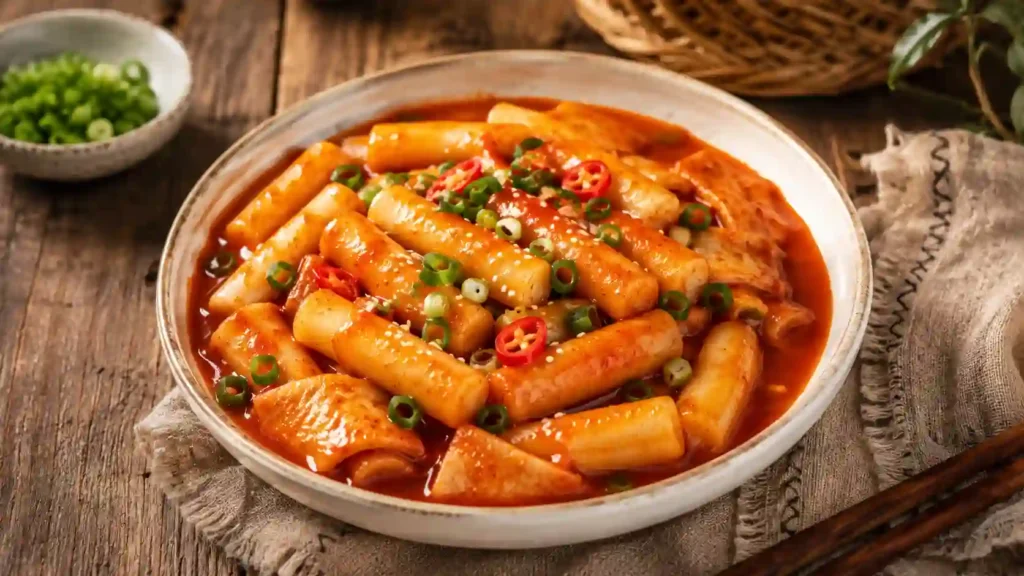
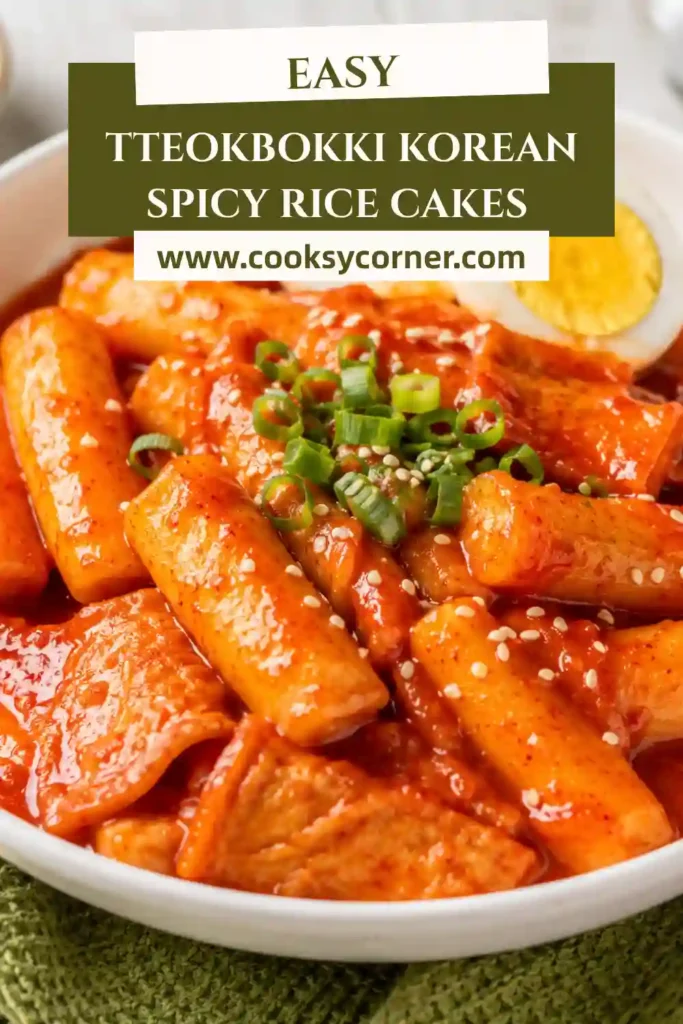
If you’re craving authentic Korean street food at home, this Tteokbokki (Korean Spicy Rice Cakes) recipe is the perfect place to start. Chewy rice cakes are simmered in a rich, spicy gochujang sauce made with homemade anchovy stock, creating an irresistible balance of savory, sweet, and spicy flavors. This comforting dish is easy to prepare and makes a delicious snack, appetizer, or light meal.
Why You’ll Love This Recipe
- Authentic Korean street food flavor.
- Soft, chewy rice cakes with a rich spicy sauce.
- Homemade anchovy broth adds incredible depth.
- Ready in about 40 minutes.
- Easy to customize with your favorite toppings.
- Perfect as a snack, lunch, or dinner.
- Better than takeout.
- Naturally dairy-free.
Ingredients
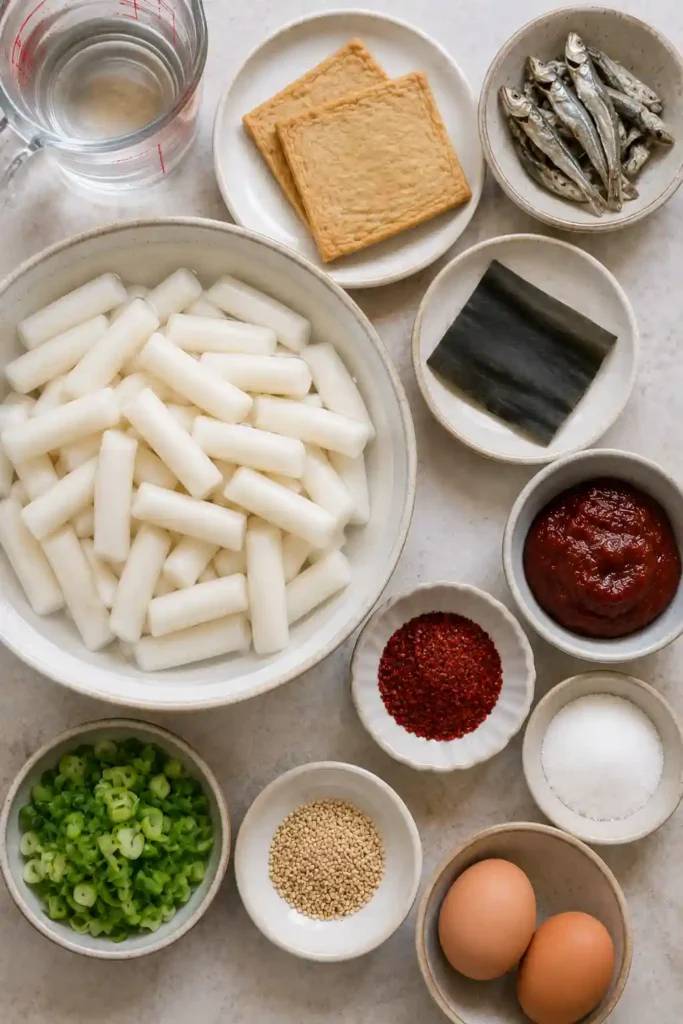
For the Rice Cakes
- 1 pound (2 cups) cylindrical Korean rice cakes
For the Anchovy Stock
- 8 dried anchovies, heads and intestines removed
- 1 sheet dried kelp (about 6 x 4 inches)
- 2 fish cake sheets, thawed
- 4 cups water
For the Sauce
- 2 tablespoons gochujang (Korean chili paste)
- ½ tablespoon gochugaru (Korean chili flakes)
- ½ tablespoon granulated sugar
Optional Garnishes
- Hard-boiled eggs
- Chopped scallions
- Toasted sesame seeds
Instructions
- Place the rice cakes in hot water and soak for 15 to 20 minutes while preparing the anchovy stock.
- Add the dried anchovies, dried kelp, fish cake sheets, and water to a large skillet or saucepan.
- Bring to a boil over high heat, then reduce to a gentle simmer and cook for 15 minutes.
- Remove the fish cakes and set them aside to cool slightly.
- Strain the stock, discarding the anchovies and kelp.
- Measure 1 cup of the stock and return it to the skillet. Reserve the remaining stock for another recipe.
- Heat the stock over medium heat and whisk in the gochujang, gochugaru, and sugar until smooth.
- Drain the soaked rice cakes and add them to the sauce.
- Cook for about 5 minutes, stirring frequently, until the rice cakes become tender and the sauce thickens.
- Slice the fish cakes into bite-sized strips and add them to the skillet.
- Gently toss everything together for another minute.
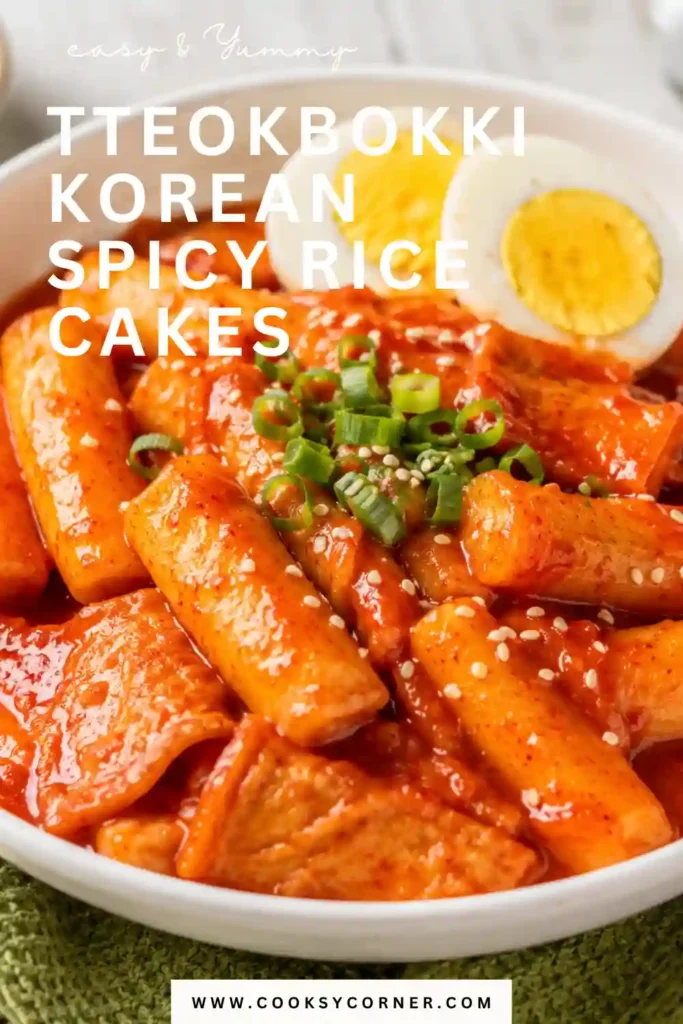
- Serve immediately topped with hard-boiled eggs, chopped scallions, and toasted sesame seeds if desired.
Tips & Tricks
- Fresh rice cakes have the best chewy texture.
- Soaking refrigerated rice cakes helps soften them before cooking.
- Stir frequently to prevent the sauce from sticking.
- Add more gochujang if you prefer extra heat.
- Mozzarella cheese makes a delicious modern topping.
- Add ramen noodles for a heartier meal.
- Use homemade anchovy stock for the most authentic flavor.
Details
Prep Time: 20 minutes
Cook Time: 20 minutes
Total Time: 40 minutes
Yield: 4 servings
Category: Main Dish, Snack
Method: Simmering
Cuisine: Korean
Difficulty: Easy
Dietary Notes: Dairy-Free (without cheese)
Notes
- Leftover anchovy stock freezes well for future recipes.
- Add boiled dumplings or ramen noodles for a complete meal.
- Garnish with extra sesame seeds and fresh scallions.
- Serve immediately while the rice cakes are soft and chewy.
Nutrition (Approximate Per Serving)
- Calories: 310
- Protein: 11g
- Carbohydrates: 56g
- Fat: 5g
- Saturated Fat: 1g
- Fiber: 2g
- Sugar: 5g
- Sodium: 780mg
Frequently Asked Questions
What is Tteokbokki?
Tteokbokki is a popular Korean street food made with chewy rice cakes simmered in a spicy, sweet gochujang-based sauce.
Can I make it less spicy?
Yes. Reduce the amount of gochujang and omit the gochugaru for a milder version.
Can I use frozen rice cakes?
Yes. Thaw or soak them in warm water before cooking.
Can I make it vegetarian?
Yes. Replace the anchovy stock with vegetable broth and omit the fish cakes.
How do I store leftovers?
Refrigerate in an airtight container for up to 3 days. Add a splash of water when reheating to loosen the sauce.
Storage
Refrigerator
Store leftovers in an airtight container for up to 3 days.
Freezer
Freezing is not recommended, as rice cakes can become hard and lose their chewy texture.
Reheating
Reheat gently in a skillet with a few tablespoons of water until the sauce loosens and the rice cakes become soft again.
Similar Recipes
Tteokbokki (Korean Spicy Rice Cakes)
Ingredients
For the Rice Cakes
- 1 pound 2 cups cylindrical Korean rice cakes
For the Anchovy Stock
- 8 dried anchovies heads and intestines removed
- 1 sheet dried kelp about 6 x 4 inches
- 2 fish cake sheets thawed
- 4 cups water
For the Sauce
- 2 tablespoons gochujang Korean chili paste
- ½ tablespoon gochugaru Korean chili flakes
- ½ tablespoon granulated sugar
Optional Garnishes
- Hard-boiled eggs
- Chopped scallions
- Toasted sesame seeds
Instructions
- Place the rice cakes in hot water and soak for 15 to 20 minutes while preparing the anchovy stock.
- Add the dried anchovies, dried kelp, fish cake sheets, and water to a large skillet or saucepan.
- Bring to a boil over high heat, then reduce to a gentle simmer and cook for 15 minutes.
- Remove the fish cakes and set them aside to cool slightly.
- Strain the stock, discarding the anchovies and kelp.
- Measure 1 cup of the stock and return it to the skillet. Reserve the remaining stock for another recipe.
- Heat the stock over medium heat and whisk in the gochujang, gochugaru, and sugar until smooth.
- Drain the soaked rice cakes and add them to the sauce.
- Cook for about 5 minutes, stirring frequently, until the rice cakes become tender and the sauce thickens.
- Slice the fish cakes into bite-sized strips and add them to the skillet.
- Gently toss everything together for another minute.
- Serve immediately topped with hard-boiled eggs, chopped scallions, and toasted sesame seeds if desired.
Notes
- Leftover anchovy stock freezes well for future recipes.
- Add boiled dumplings or ramen noodles for a complete meal.
- Garnish with extra sesame seeds and fresh scallions.
- Serve immediately while the rice cakes are soft and chewy.
Conclusion
This Tteokbokki (Korean Spicy Rice Cakes) recipe brings the bold flavors of Korean street food right into your kitchen. With chewy rice cakes, savory fish cakes, and a rich homemade gochujang sauce, every bite is comforting, spicy, and satisfying. Whether you’re new to Korean cooking or already a fan, this classic recipe is simple to prepare and guaranteed to become a favorite