
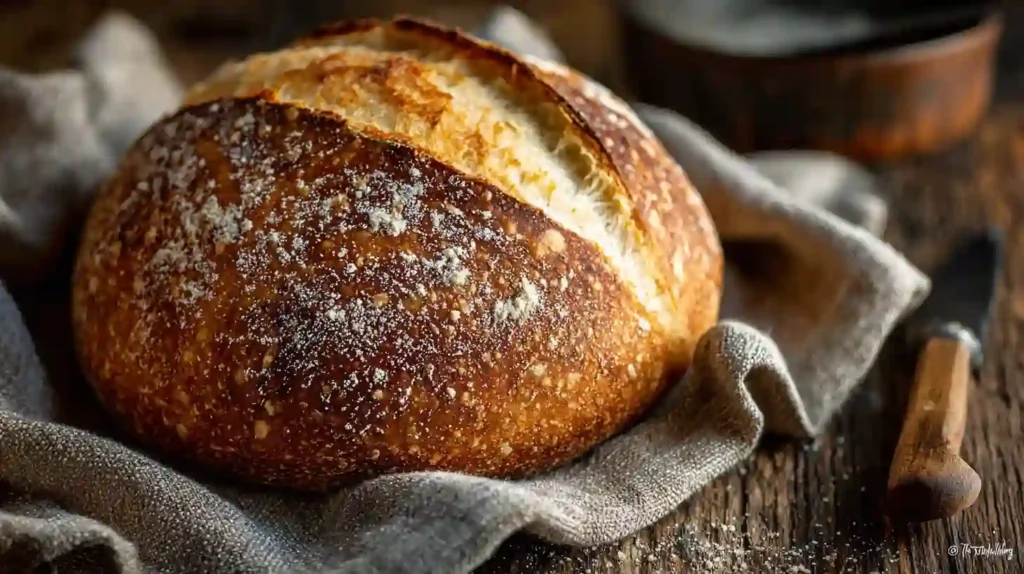
Sourdough Bread is one of the most rewarding homemade bread recipes you can learn. With its crisp golden crust, airy crumb, and rich tangy flavor, this beginner-friendly sourdough recipe makes artisan bread achievable right in your own kitchen. Whether you are just starting your sourdough journey or improving your bread baking skills, this guide will help you create beautiful homemade sourdough bread with confidence.
Why You’ll Love This Recipe
- Perfect for beginners learning how to make sourdough bread
- Crispy crust with a soft and chewy interior
- Uses simple pantry ingredients
- Flexible fermentation times for different seasons
- Naturally fermented for deeper flavor and better texture
- Great for sandwiches, toast, or serving alongside soups and salads
Ingredients
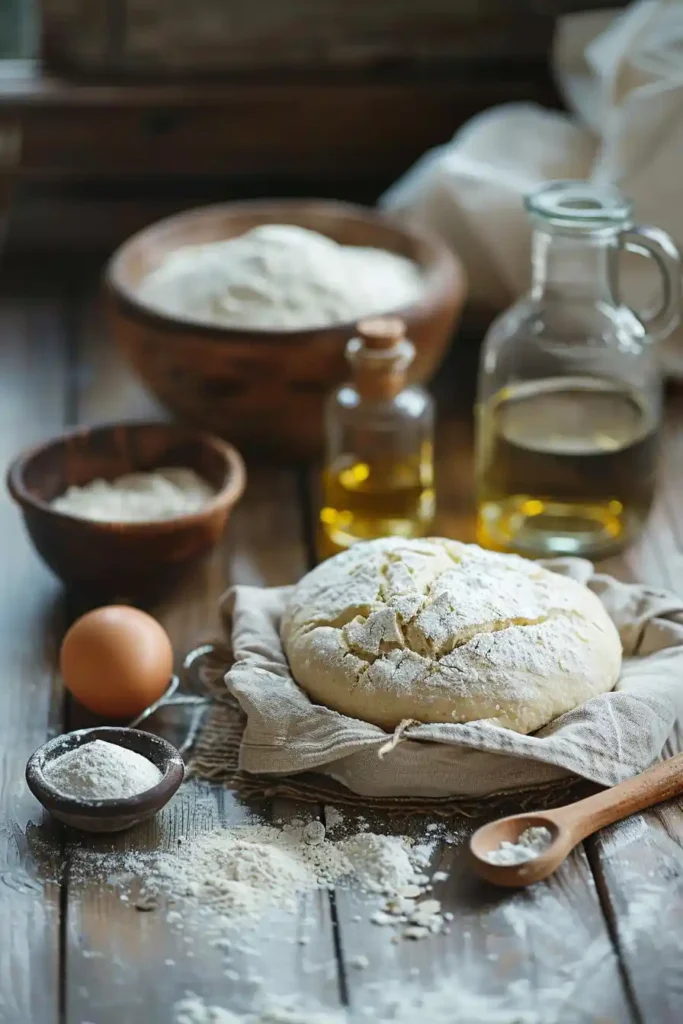
- 150g bubbly active sourdough starter
- 250g warm water
- 25g olive oil
- 500g bread flour
- 10g fine sea salt
- Fine ground cornmeal or parchment paper
Instructions
Make the Dough
In a large mixing bowl, combine the sourdough starter, warm water, and olive oil. Stir with a fork until blended.
Add the bread flour and sea salt. Mix until a stiff dough forms, then use your hands to fully incorporate the flour. The dough will appear rough and shaggy at first.
Cover the bowl with plastic wrap or a damp kitchen towel and let the dough rest for 30 minutes to 1 hour.
After resting, gently shape the dough into a rough ball for about 15 seconds.
Bulk Rise
Cover the bowl with lightly oiled plastic wrap and place it in a warm area between 70–75°F.
Allow the dough to rise until nearly doubled in size and no longer dense.
Approximate fermentation times:
- Summer: 2–4 hours at 80°F
- Winter: 10–12 hours at 68°F
Watch the dough rather than the clock for best results.
Optional Stretch and Folds
To strengthen your sourdough bread dough, perform stretch and folds during bulk fermentation.
Starting 30–45 minutes into fermentation:
- Lift one side of the dough
- Stretch upward gently
- Fold it over itself
- Rotate the bowl and repeat
Complete 1 set, then repeat 1–2 more times spaced about 1 hour apart.
Shape the Dough
Transfer the dough to a lightly floured surface.
Fold the dough inward from multiple sides toward the center. Flip seam-side down and gently rotate while cupping the edges to create surface tension and form a tight ball.
Second Rise
Line a Dutch oven with parchment paper or sprinkle with cornmeal.
Place the dough inside, cover, and let rise for 30 minutes to 1 hour until slightly puffy.
Preheat the oven to 450°F (232°C).
If using higher hydration dough with extra water, use a floured proofing basket instead of free-form rising.
Score the Dough
Using a bread lame or sharp knife, make a shallow slash about 1/4-inch deep across the top of the dough.
Bake the Dough
Place the covered Dutch oven onto the center rack.
Reduce oven temperature to 400°F (204°C) and bake for 20 minutes with the lid on.
Remove the lid and continue baking for another 40 minutes until deep golden brown.
For accuracy, check the internal temperature of the homemade sourdough bread:
205∘F to 210∘F
Remove the bread from the Dutch oven and cool on a wire rack for at least 1 hour before slicing.

Tips & Tricks
- Use a digital kitchen scale for precise measurements
- Bread flour creates better structure than all-purpose flour
- Increase water to 300–325g for a softer, more open crumb
- Long fermentation improves flavor and texture
- Cold kitchens require longer rise times
- Avoid over-flouring while shaping to maintain tension
Details
- Prep Time: 20 minutes
- Rest & Rise Time: 4–12 hours
- Bake Time: 60 minutes
- Total Time: 5–13 hours
- Yield: 1 loaf
- Category: Bread
- Method: Baking
- Cuisine: American
- Difficulty: Beginner to Intermediate
- Dietary Notes: Vegetarian, Dairy-Free

Notes
- Use parchment paper for easy cleanup
- A 5½ to 6-quart Dutch oven works best
- Great served with butter, olive oil, soups, or sandwiches
- Store fully cooled bread to preserve texture
Nutrition (Approximate Per Slice)
- Calories: 180
- Protein: 6g
- Carbohydrates: 32g
- Fat: 3g
- Fiber: 1g
FAQ
Why is my sourdough bread dense?
Dense sourdough bread is usually caused by under-fermentation or weak starter activity. Ensure your starter is bubbly and active before mixing the dough.
Can I use all-purpose flour instead of bread flour?
Bread flour is recommended because it contains more protein, which helps create structure and chewiness.
How do I know when bulk fermentation is complete?
The dough should appear puffier, lighter, and nearly doubled in size.
Can I refrigerate the dough overnight?
Yes. Cold fermentation improves flavor and makes the dough easier to handle.
Why do I need to score the dough?
Scoring controls how the bread expands during baking and helps prevent random cracking.
What is the best way to get a crispy crust?
Baking in a Dutch oven traps steam, which helps create a crisp artisan crust.
Storage
- Store at room temperature in a bread bag or wrapped in a towel for up to 3 days
- Freeze sliced sourdough bread for up to 3 months
- Reheat slices in a toaster or warm oven for best texture

Similar Recipes
easy sourdough bread
Ingredients
- 150 g bubbly active sourdough starter
- 250 g warm water
- 25 g olive oil
- 500 g bread flour
- 10 g fine sea salt
- Fine ground cornmeal or parchment paper
Instructions
Make the Dough
- In a large mixing bowl, combine the sourdough starter, warm water, and olive oil. Stir with a fork until blended.
- Add the bread flour and sea salt. Mix until a stiff dough forms, then use your hands to fully incorporate the flour. The dough will appear rough and shaggy at first.
- Cover the bowl with plastic wrap or a damp kitchen towel and let the dough rest for 30 minutes to 1 hour.
- After resting, gently shape the dough into a rough ball for about 15 seconds.
Bulk Rise
- Cover the bowl with lightly oiled plastic wrap and place it in a warm area between 70–75°F.
- Allow the dough to rise until nearly doubled in size and no longer dense.
- Approximate fermentation times:
- Summer: 2–4 hours at 80°F
- Winter: 10–12 hours at 68°F
- Watch the dough rather than the clock for best results.
Optional Stretch and Folds
- To strengthen your sourdough bread dough, perform stretch and folds during bulk fermentation.
- Starting 30–45 minutes into fermentation:
- Lift one side of the dough
- Stretch upward gently
- Fold it over itself
- Rotate the bowl and repeat
- Complete 1 set, then repeat 1–2 more times spaced about 1 hour apart.
Shape the Dough
- Transfer the dough to a lightly floured surface.
- Fold the dough inward from multiple sides toward the center. Flip seam-side down and gently rotate while cupping the edges to create surface tension and form a tight ball.
Second Rise
- Line a Dutch oven with parchment paper or sprinkle with cornmeal.
- Place the dough inside, cover, and let rise for 30 minutes to 1 hour until slightly puffy.
- Preheat the oven to 450°F (232°C).
- If using higher hydration dough with extra water, use a floured proofing basket instead of free-form rising.
Score the Dough
- Using a bread lame or sharp knife, make a shallow slash about 1/4-inch deep across the top of the dough.
Bake the Dough
- Place the covered Dutch oven onto the center rack.
- Reduce oven temperature to 400°F (204°C) and bake for 20 minutes with the lid on.
- Remove the lid and continue baking for another 40 minutes until deep golden brown.
- For accuracy, check the internal temperature of the homemade sourdough bread:
- 205
- ∘
- F to 210
- ∘
- F
- Remove the bread from the Dutch oven and cool on a wire rack for at least 1 hour before slicing.
Notes
- Use parchment paper for easy cleanup
- A 5½ to 6-quart Dutch oven works best
- Great served with butter, olive oil, soups, or sandwiches
- Store fully cooled bread to preserve texture
Conclusion
Making homemade sourdough bread may seem intimidating at first, but this beginner-friendly recipe breaks the process down into simple, manageable steps. With practice, patience, and a bubbly starter, you’ll soon be baking beautiful artisan loaves with incredible flavor and texture right at home.