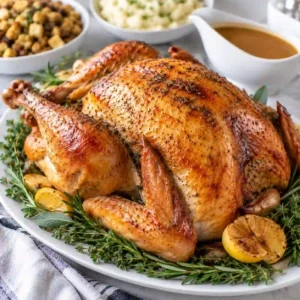
Roast Turkey and Gravy
Roast Turkey and Gravy features herb-buttered turkey roasted until golden and juicy.
Ingredients
- - 2 tablespoons kosher salt
- - 1 tablespoon ground black pepper
- - 1 tablespoon poultry seasoning
- - 1 whole turkey about 12 pounds, neck and giblets reserved
- - 2 onions coarsely chopped
- - 3 celery ribs coarsely chopped
- - 2 carrots coarsely chopped
- - 1/2 bunch fresh sage
- - 3 sprigs fresh rosemary
- - 8 tablespoons unsalted or salted butter softened
- - Water as needed for the roasting pan
Turkey Stock
- - Reserved turkey neck and giblets
- - 6 cups water
- - 1 bay leaf
Gravy
- - 2 tablespoons reserved turkey fat
- - 1 tablespoon butter
- - 1/4 cup all-purpose flour
- - 4 cups prepared turkey stock
- - Reserved turkey pan juices
- - 1/4 teaspoon balsamic vinegar optional
- - 1 tablespoon fresh sage finely chopped
- - Salt to taste
- - Freshly ground black pepper to taste
Instructions
- Preheat the oven to 325°F (165°C). Position an oven rack so the turkey will fit comfortably in the center.
- In a small bowl, combine the kosher salt, black pepper, and poultry seasoning.
- Pat the turkey thoroughly dry with paper towels. Tuck the wing tips underneath the bird.
- Season the turkey cavity with approximately 1 tablespoon of the seasoning mixture.
- Combine the chopped onions, celery, and carrots. Place about 1/2 cup of the vegetables inside the turkey cavity along with several fresh sage leaves and the rosemary sprigs.
- Tie the turkey legs loosely together with kitchen twine.
- Carefully loosen the skin over the breast using your fingers, taking care not to tear it. Spread approximately 2 tablespoons of softened butter underneath the skin.
- Rub the remaining softened butter over the outside of the turkey. Season evenly with the remaining poultry seasoning mixture.
- Spread the remaining onions, carrots, and celery across the bottom of a large roasting pan. Position the turkey over the vegetables.
- Pour enough water into the roasting pan to create approximately a 1/2-inch layer. Loosely shield the breast with aluminum foil.
- Transfer the Roast Turkey and Gravy centerpiece to the oven and roast for approximately 3–3 1/2 hours, adjusting as necessary according to the turkey's size and your oven.
- During the final hour, remove the foil so the breast can brown. Spoon some pan juices over the turkey occasionally if desired.
- Check the turkey with an instant-read thermometer in the thickest areas, avoiding contact with bone. For food safety, the turkey should reach at least 165°F (74°C) in the breast, thigh, and wing area.
- While the turkey roasts, place the reserved neck and giblets in a saucepan with 6 cups water and the bay leaf.
- Bring to a gentle simmer and cook for approximately 2 hours. Strain the stock, discarding the solids, and reserve at least 4 cups for the gravy.
- When the turkey is fully cooked, transfer it carefully to a large carving board or platter.
- Loosely cover with foil and let it rest for at least 20–30 minutes before carving. A larger turkey benefits from this longer rest because the juices have time to redistribute.
- Carefully pour the liquid from the roasting pan into a heat-safe bowl or measuring jug. Allow the fat to rise, then skim and reserve about 2 tablespoons.
- To prepare the gravy, heat the reserved turkey fat with 1 tablespoon butter in a large skillet or saucepan over medium heat.
- Add some of the roasted onion from the pan and cook for approximately 5 minutes until deeply softened and browned.
- Sprinkle in the flour. Cook for 3–5 minutes, stirring continuously, until the flour loses its raw aroma and takes on a light golden color.
- Gradually whisk in about 4 cups of the homemade turkey stock, followed by the reserved pan juices.
- Bring the mixture to a gentle simmer and cook for approximately 8–10 minutes, whisking regularly, until the gravy reaches your preferred consistency.
- Stir in the optional balsamic vinegar and chopped fresh sage.
- Taste and season with salt and freshly ground black pepper as necessary.
- Carve the rested turkey and serve immediately with the warm homemade gravy.
Notes
A 12-pound turkey generally works well for a medium-to-large gathering, but always plan portions according to the number of guests and whether you want leftovers.
Fresh thyme can be added alongside the sage and rosemary for an even more aromatic herb butter turkey.
If you prefer not to use the neck and giblets, prepare the gravy with a good-quality halal chicken or turkey stock instead.
The balsamic vinegar is optional but provides subtle acidity that helps balance the richness of the gravy.
If your poultry seasoning contains added flavorings, check the ingredient label to ensure it's suitable for your dietary requirements.
Serve with mashed potatoes, roasted vegetables, stuffing, cranberry sauce, green beans, or dinner rolls for a classic holiday meal.