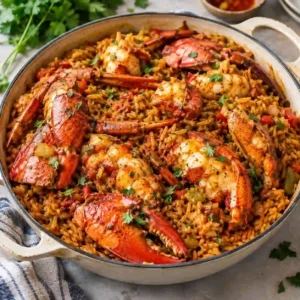
Lobster Banga Rice with Fragrant Palmnut Broth
Simmer prawn shells, smoked cod, palmnut cream, aromatics, and spices for 40 minutes, then blend and strain.Toast jasmine rice, add 325 ml banga broth, and cook covered, checking tenderness and moisture.Steam lobster over the rice until cooked, rest the rice, briefly butter-baste the lobster, and serve with green seasoning.
Ingredients
For the banga broth
- - 2 tablespoons vegetable oil
- - 500 g 1 lb 2 oz prawn shells
- - 50 g 1¾ oz onion, thinly sliced
- - 200 g 7 oz halal-suitable smoked cod offcuts
- - 6 lemongrass stalks
- - 10 g uda toasted with seeds removed
- - 20 g ¾ oz halal-suitable banga spice powder
- - 50 g 1¾ oz fresh ginger root, peeled and grated
- - 300 g 10½ oz halal-suitable palmnut cream, ideally a suitable spiced abemudro-style version
- - Juice of 1 lemon
- - 150 ml 5 fl oz coconut cream
- - 1 large red pepper chopped
- - ½ tablespoon tomato purée
- - 200 ml 7 fl oz water
- - Salt and freshly ground black pepper to taste
For the banga rice and lobster
- - 2 tablespoons vegetable oil
- - 250 g 9 oz jasmine rice
- - 325 ml 11 fl oz prepared banga broth, plus a little extra if needed
- - 2 lobster tails
- - 25 g 1 oz halal-suitable unsalted butter, divided between finishing the rice and basting the lobster
- For the green seasoning
- - 20 g ¾ oz fresh Thai basil, finely chopped
- - 1–2 green jalapeños finely chopped, to taste
- - 1 small bunch spring onions finely chopped
- - 1 green pepper finely chopped
- - 2 garlic cloves finely chopped
- - Juice of ½ lime
- - Vegetable oil enough to loosen to the desired consistency
Instructions
- Step 1: Fry the prawn shells
- Heat 2 tablespoons vegetable oil in a large, heavy casserole over medium heat. Add the prawn shells and cook, stirring occasionally, until they become fragrant and release their flavorful oils.
- Step 2: Soften the onion
- Add the sliced onion to the casserole. Cook until completely softened, stirring to prevent it from catching on the bottom.
- Step 3: Build the banga broth
- Lightly bruise the lemongrass stalks to help release their aroma. Add them to the casserole with the smoked cod, toasted uda, banga spice powder, grated ginger, palmnut cream, lemon juice, coconut cream, chopped red pepper, tomato purée, and 200 ml water.
- Stir well to combine.
- Step 4: Simmer for 40 minutes
- Bring the mixture to a gentle simmer. Cook for 40 minutes, stirring occasionally so the palmnut mixture does not stick. Add a small splash of water if needed to keep the broth moving freely.
- Step 5: Blend and strain the broth
- Allow the mixture to cool slightly before blending. Working in batches if necessary, blend for approximately 6 minutes total, or until the ingredients are thoroughly broken down.
- Never fill a blender too high with hot liquid; vent the lid as directed by the manufacturer and protect your hand with a towel. Pass the blended mixture through a fine sieve into a large bowl, pressing gently to extract the flavorful liquid. Discard the strained shell and fibrous solids.
- Step 6: Season and measure
- Season the strained broth with salt and freshly ground black pepper. Measure 325 ml for the rice and reserve any remaining broth for adjusting the cooking liquid or serving.
- Step 7: Toast the jasmine rice
- Heat 2 tablespoons vegetable oil in a large, heavy saucepan with a tight-fitting lid. Add the jasmine rice and cook for approximately 7 minutes, stirring frequently, until the grains are evenly coated and lightly toasted.
- Step 8: Add the broth and cook the rice
- Pour 325 ml banga broth over the rice and stir once. Bring to a gentle simmer, cover, and cook over medium-low to medium heat for up to approximately 35 minutes, checking the liquid level and tenderness along the way.
- Jasmine rice often cooks faster than 35 minutes, and 325 ml may be insufficient for some pans or rice brands. Reduce the heat if the liquid evaporates quickly. Add a little reserved hot broth or water if the rice is still firm and the pan is becoming dry.
- Step 9: Steam the lobster
- When the rice is nearly tender and still has enough moisture to produce steam, place the lobster tails on top. Cover and steam for approximately 10 minutes, or until the lobster flesh is opaque and reaches 145°F (63°C) at its thickest point.
- If the rice is already tender before the lobster is cooked, keep the heat low and add a splash of hot broth as needed to prevent scorching. Avoid extending the steaming time unnecessarily, as lobster can become tough.
- Step 10: Rest the rice
- Transfer the cooked lobster tails to a clean plate. Stir approximately 10 g of the listed butter into the rice, cover, remove from the heat, and let it rest for 6 minutes.
- Reserve the remaining approximately 15 g butter for basting the lobster.
- Step 11: Make the green seasoning
- Place the Thai basil, jalapeños, spring onions, green pepper, garlic, and lime juice in a large mortar. Pound with a pestle until finely crushed and combined.
- Add vegetable oil a little at a time until the seasoning reaches a spoonable consistency. Set aside.
- Step 12: Briefly butter-baste the lobster
- Heat a small frying pan over medium heat with a light film of vegetable oil. Add the cooked lobster tails and warm one side briefly. Add the reserved approximately 15 g butter, turn the tails, and spoon the melted butter over them.
- Baste for 2–3 minutes total, just long enough to coat and lightly finish the lobster. Because the tails are already cooked, avoid prolonged frying.
- Step 13: Plate and serve
- Fluff the rice gently and spoon it onto serving plates. Remove the lobster meat from the shells if needed, slice it into medallions, and arrange it over the rice. Serve the green seasoning alongside.
Notes
Palmnut cream: Spiced abemudro-style palmnut cream can add extra depth, but check its ingredients and salt level before seasoning the broth.
Smoked cod: Smoked fish contributes savoriness. Choose a halal-suitable product without unsuitable curing or flavoring ingredients.
Broth quantity: The rice uses 325 ml of strained broth. The full broth recipe may produce more; keep the remainder available in case the rice needs extra liquid.
Smoked cod: Smoked fish contributes savoriness. Choose a halal-suitable product without unsuitable curing or flavoring ingredients.
Broth quantity: The rice uses 325 ml of strained broth. The full broth recipe may produce more; keep the remainder available in case the rice needs extra liquid.