
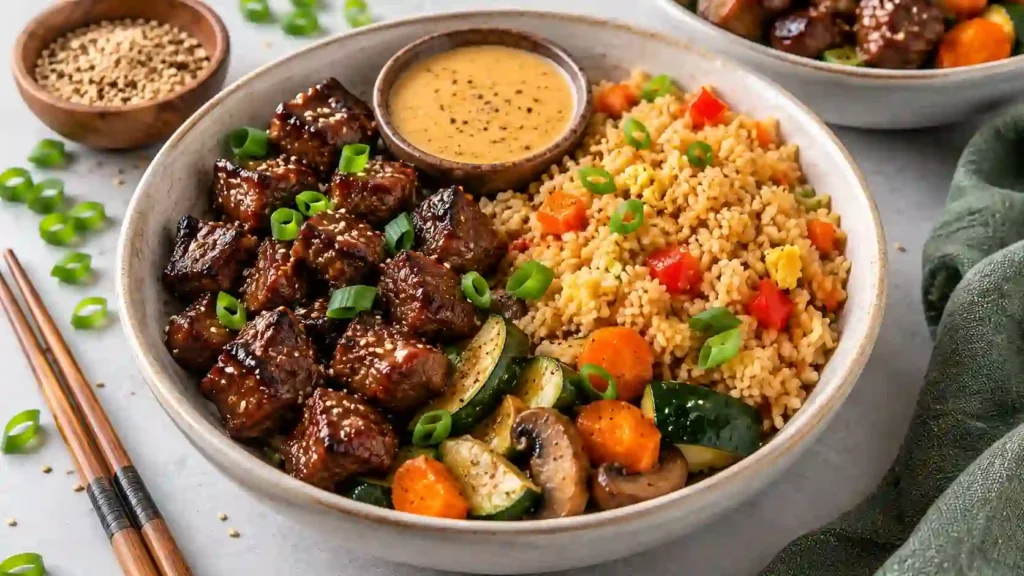
These Hibachi Steak Bowls bring Japanese steakhouse-inspired flavors straight to your kitchen. Juicy garlic-ginger steak, buttery sautéed zucchini, carrots, and mushrooms are served over fried rice with creamy Yum Yum sauce. This easy dinner is savory, colorful, filling, and perfect for a restaurant-style family meal at home.
Why You’ll Love This Recipe
The combination of tender steak and buttery vegetables gives these bowls plenty of flavor and texture. Garlic, ginger, sesame oil, and a savory glaze transform simple sirloin into beautifully seared steak bites.
The recipe is also flexible. You can use fried rice or steamed rice, change the vegetables according to what you have available, and adjust the sauce to suit your family.
Everything cooks in one wok or large skillet, making these Japanese steak bowls surprisingly manageable for a weeknight dinner.
Ingredients
For the Steak
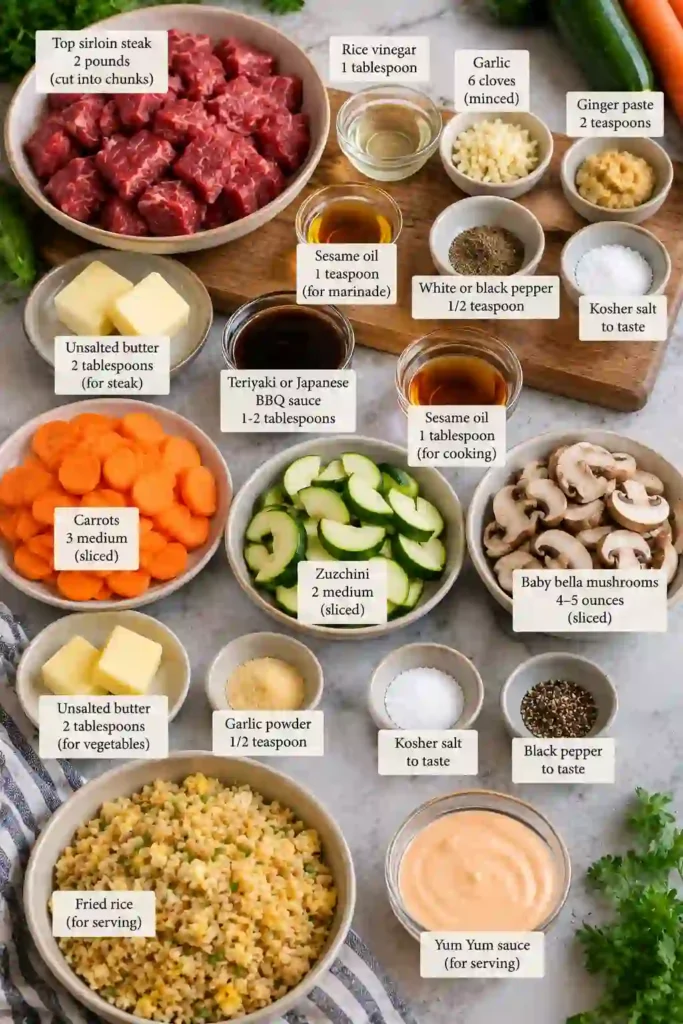
- 2 pounds top sirloin steak, cut into bite-sized chunks
- 1 tablespoon rice vinegar
- 6 garlic cloves, finely minced or pressed
- 2 teaspoons ginger paste
- 1 teaspoon sesame oil
- ½ teaspoon ground white pepper or black pepper
- Kosher salt, to taste
- 2 tablespoons unsalted butter
- 1 tablespoon sesame oil
- 1–2 tablespoons halal-friendly teriyaki sauce or Japanese-style BBQ sauce
For the Hibachi Vegetables
- 3 medium carrots, thinly sliced on a bias
- 2 medium zucchini, halved lengthwise and sliced into half-moons
- 4–5 ounces baby bella or other mushrooms, sliced
- 2 tablespoons unsalted butter
- 1 tablespoon sesame oil
- ½ teaspoon garlic powder
- Kosher salt, to taste
- Black pepper, to taste
For Serving
- Fried rice
- Halal-friendly Yum Yum sauce
Instructions
- Place the sirloin pieces in a large bowl. Add the rice vinegar, minced garlic, ginger paste, 1 teaspoon sesame oil, white or black pepper, and salt. Toss thoroughly so every piece of steak is coated.
- Cover and refrigerate the steak for at least 30 minutes. Remove it from the refrigerator shortly before cooking.
- Heat 2 tablespoons butter and 1 tablespoon sesame oil in a large skillet or wok over medium heat.
- Add the carrots, zucchini, and mushrooms. Cook for 10–15 minutes, tossing regularly, until the vegetables are tender and develop golden-brown edges.
- Season the vegetables with garlic powder, salt, and pepper. Transfer them to a clean plate and set aside.
- If necessary, carefully wipe the skillet clean. Return it to the stove and increase the heat to medium-high.
- Add the remaining 2 tablespoons butter and 1 tablespoon sesame oil.
- Once the skillet is hot, add the marinated steak. Arrange the pieces with enough room around them to encourage browning. Cook for approximately 3–4 minutes, tossing occasionally, until nicely seared and cooked to your preferred doneness. Work in batches if your skillet is not large enough.
- Remove the skillet from the heat. Drizzle 1–2 tablespoons teriyaki or Japanese-style BBQ sauce over the steak and toss until the pieces are lightly coated and glossy.
- Divide warm fried rice among shallow serving bowls. Arrange the steak and sautéed vegetables over the rice.
- Finish the Hibachi Steak Bowls with Yum Yum sauce or serve the sauce on the side.
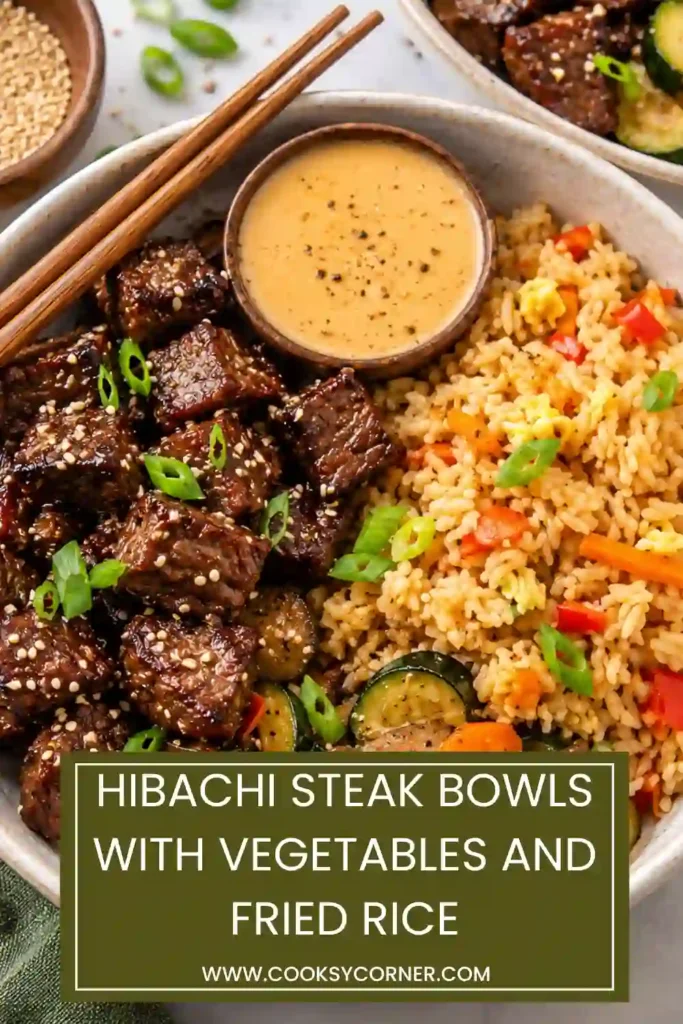
Tips & Tricks
Cut the steak into similarly sized pieces so they cook at roughly the same rate. Avoid cutting the pieces too small, as small cubes can overcook quickly.
A hot skillet is essential for achieving a browned exterior. If too much steak is crowded into the pan at once, moisture can accumulate and cause the meat to steam instead of sear.
Cook the carrots first for a few minutes if you prefer very tender vegetables, then add the zucchini and mushrooms.
Top sirloin offers a great balance of flavor, tenderness, and affordability. Ribeye or New York strip can also be used for richer steak bowls.
For extra restaurant-style flavor, finish the vegetables with a small amount of butter immediately before serving.
Traditional mirin contains alcohol, so this halal-friendly version replaces it with rice vinegar. For a slightly sweeter result, combine the tablespoon of rice vinegar with about ½ teaspoon sugar.
Check teriyaki, Japanese BBQ, and Yum Yum sauces carefully, as formulations differ. Choose halal-certified or verified alcohol-free products.
Details
Prep Time: 15 minutes
Marinating Time: 30 minutes
Cook Time: 25 minutes
Total Time: 1 hour 10 minutes
Yield: 6 servings
Category: Main Course
Method: Stovetop
Cuisine: Japanese-American Inspired
Difficulty: Easy to Moderate
Dietary Notes: Halal-friendly when prepared with halal-certified beef and alcohol-free sauces

Notes
For a simpler dinner, serve the steak and vegetables over plain steamed jasmine rice instead of fried rice.
You can also customize these hibachi steak rice bowls with broccoli, onions, bell peppers, snap peas, or asparagus.
For meal prep, portion the rice, steak, and vegetables into individual containers. Keep the Yum Yum sauce separate and add it after reheating.
If you prefer additional heat, add a little chili sauce or crushed red pepper before serving.
Nutrition
Approximate nutrition per serving, excluding fried rice and Yum Yum sauce:
Calories: 440 kcal
Protein: 36 g
Carbohydrates: 10 g
Fat: 29 g
Nutrition information is an estimate. The final values will vary depending on the steak, sauces, serving size, and accompaniments.
FAQ
What are Hibachi Steak Bowls?
Hibachi Steak Bowls are Japanese steakhouse-inspired rice bowls featuring bite-sized seared steak, sautéed vegetables, rice, and a creamy or savory finishing sauce. This homemade version uses sirloin, zucchini, carrots, mushrooms, and Yum Yum sauce.
What steak is best for hibachi steak bowls?
Top sirloin is an excellent choice because it is flavorful, relatively tender, and easy to cut into bite-sized pieces. Ribeye provides more richness and marbling, while New York strip is another flavorful alternative.
What vegetables go with hibachi steak?
Zucchini, carrots, mushrooms, onions, and broccoli are all excellent options. Try to cut the vegetables into similar sizes and adjust their cooking times according to how quickly each vegetable becomes tender.
Can I make hibachi steak without a hibachi grill?
Yes. A large cast-iron skillet, wok, or heavy frying pan works very well. The key is getting the cooking surface hot enough to brown the steak without overcrowding it.
Can I prepare Hibachi Steak Bowls ahead of time?
Yes. The steak can be marinated ahead, and the cooked components can be portioned for meal prep. Store the sauce separately so the rice and vegetables maintain a better texture.
What sauce goes with hibachi steak?
Yum Yum sauce is a popular creamy accompaniment, while teriyaki-style or Japanese BBQ sauce can add a sweet-savory glaze to the steak. Check packaged sauces for alcohol and other ingredients if halal suitability is important.
Storage
Store leftover steak, vegetables, and rice in airtight containers in the refrigerator for up to 3–4 days. Keep Yum Yum sauce in a separate refrigerated container.
Reheat the steak, vegetables, and rice in a skillet over medium heat until thoroughly heated. A splash of water can help loosen refrigerated rice. You can also microwave individual portions until hot.
For the best texture, avoid repeatedly reheating the steak because it can become tough.
The cooked steak and vegetables can be frozen for up to 2 months, although zucchini will become softer after thawing. Thaw overnight in the refrigerator before reheating.
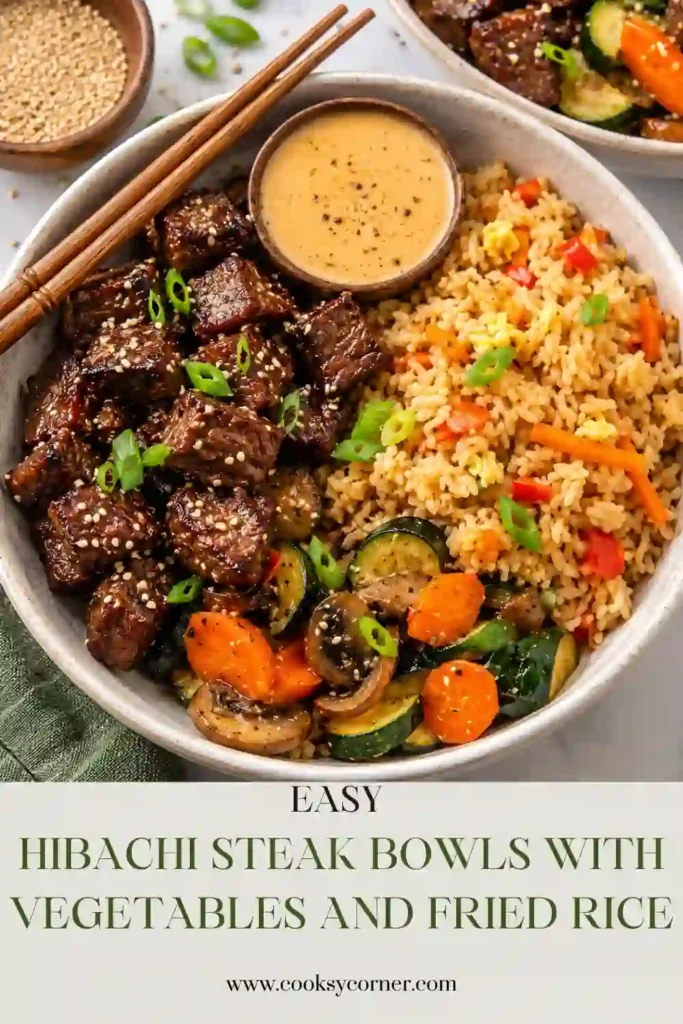
Similar Recipes
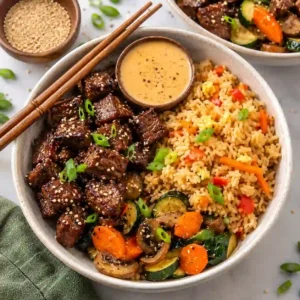
Hibachi Steak Bowls with Vegetables and Fried Rice
Ingredients
For the Steak
- 2 pounds top sirloin steak cut into bite-sized chunks
- 1 tablespoon rice vinegar
- 6 garlic cloves finely minced or pressed
- 2 teaspoons ginger paste
- 1 teaspoon sesame oil
- ½ teaspoon ground white pepper or black pepper
- Kosher salt to taste
- 2 tablespoons unsalted butter
- 1 tablespoon sesame oil
- 1 –2 tablespoons halal-friendly teriyaki sauce or Japanese-style BBQ sauce
For the Hibachi Vegetables
- 3 medium carrots thinly sliced on a bias
- 2 medium zucchini halved lengthwise and sliced into half-moons
- 4 –5 ounces baby bella or other mushrooms sliced
- 2 tablespoons unsalted butter
- 1 tablespoon sesame oil
- ½ teaspoon garlic powder
- Kosher salt to taste
- Black pepper to taste
For Serving
- Fried rice
- Halal-friendly Yum Yum sauce
Instructions
- Place the sirloin pieces in a large bowl. Add the rice vinegar, minced garlic, ginger paste, 1 teaspoon sesame oil, white or black pepper, and salt. Toss thoroughly so every piece of steak is coated.
- Cover and refrigerate the steak for at least 30 minutes. Remove it from the refrigerator shortly before cooking.
- Heat 2 tablespoons butter and 1 tablespoon sesame oil in a large skillet or wok over medium heat.
- Add the carrots, zucchini, and mushrooms. Cook for 10–15 minutes, tossing regularly, until the vegetables are tender and develop golden-brown edges.
- Season the vegetables with garlic powder, salt, and pepper. Transfer them to a clean plate and set aside.
- If necessary, carefully wipe the skillet clean. Return it to the stove and increase the heat to medium-high.
- Add the remaining 2 tablespoons butter and 1 tablespoon sesame oil.
- Once the skillet is hot, add the marinated steak. Arrange the pieces with enough room around them to encourage browning. Cook for approximately 3–4 minutes, tossing occasionally, until nicely seared and cooked to your preferred doneness. Work in batches if your skillet is not large enough.
- Remove the skillet from the heat. Drizzle 1–2 tablespoons teriyaki or Japanese-style BBQ sauce over the steak and toss until the pieces are lightly coated and glossy.
- Divide warm fried rice among shallow serving bowls. Arrange the steak and sautéed vegetables over the rice.
- Finish the Hibachi Steak Bowls with Yum Yum sauce or serve the sauce on the side.
Notes
Conclusion
These Hibachi Steak Bowls combine juicy seared sirloin, buttery vegetables, fried rice, and creamy Yum Yum sauce in one satisfying meal. Garlic, ginger, sesame, and a savory glaze provide the bold flavors you expect from a Japanese steakhouse-inspired dinner.
With a hot skillet and a little preparation, you can create flavorful steak bowls at home and customize each serving with your favorite rice, vegetables, and sauces.