
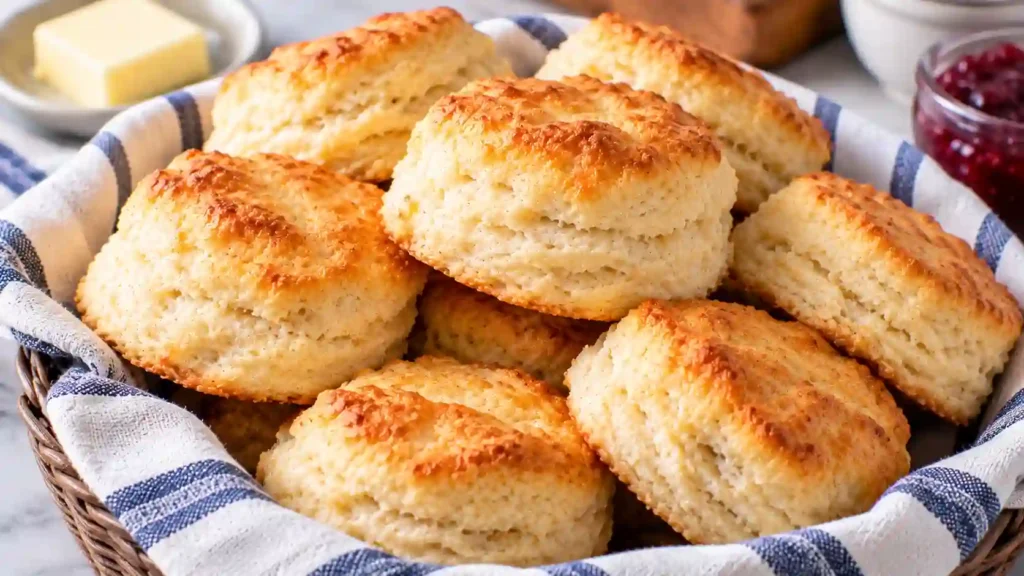
Easy Homemade Biscuits are a simple way to bring warm, flaky baking to your table. With just flour, baking powder, sugar, salt, cold butter, and milk, you can make tender biscuits with golden tops and soft, buttery centers.
The secret is keeping the butter cold and handling the dough gently. A few folds create layers without complicated techniques, making these biscuits a lovely choice for breakfast, brunch, or a cozy dinner.
Why You’ll Love This Recipe
- Simple ingredients: Everything comes together with six everyday baking staples.
- Flaky layers: Cold butter and gentle folding help create a light, layered texture.
- No shortening needed: Butter provides rich flavor on its own.
- Quick baking: The biscuits bake in approximately 12 minutes.
- Flexible milk options: Whole milk, 2% milk, or buttermilk can work.
- Perfect for sharing: Serve them warm with jam, honey, or your favorite savory meal.
Ingredients
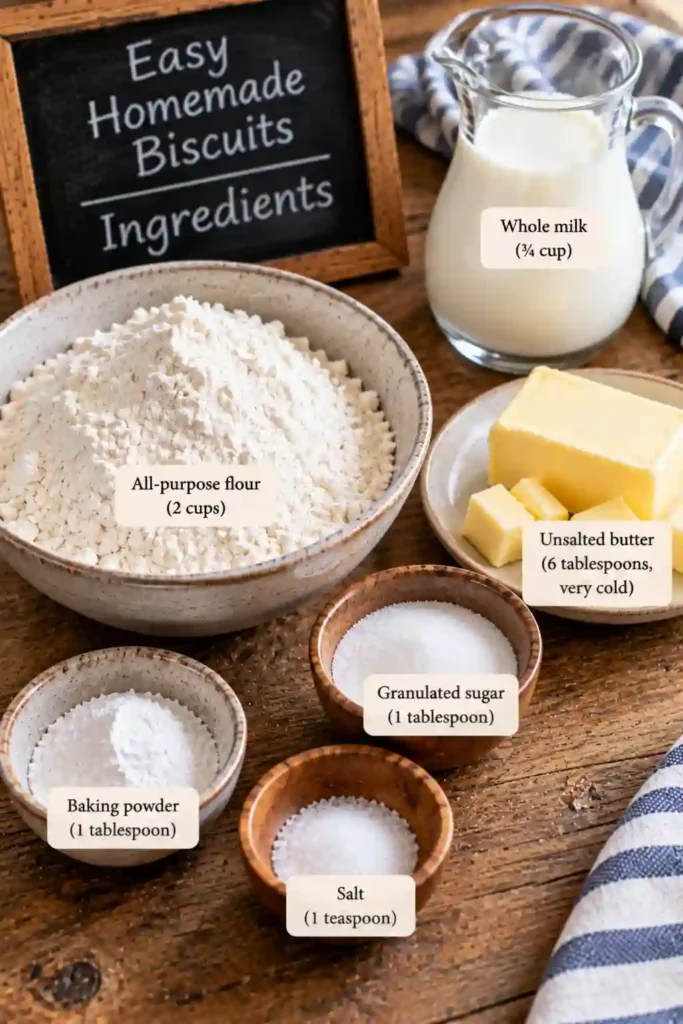
- 2 cups (250 g) all-purpose flour, plus extra for dusting
- 1 tablespoon baking powder
- 1 tablespoon granulated sugar
- 1 teaspoon salt
- 6 tablespoons (85 g) very cold, halal-suitable unsalted butter
- ¾ cup (177 ml) halal-suitable whole milk
Optional for serving
– Melted halal-suitable salted butter, for brushing
Instructions
Step 1: Chill the butter
For the flakiest results, place the butter in the freezer for 10–20 minutes before beginning. It should be very cold but still firm enough to grate or cut.
Step 2: Prepare the oven and baking sheet
Preheat the oven to 425°F (220°C). Line a baking sheet with nonstick parchment paper and set it aside.
Step 3: Mix the dry ingredients
In a large bowl, whisk together the flour, baking powder, sugar, and salt until evenly combined.
Step 4: Add the cold butter
Grate the cold butter using the large holes of a box grater, or cut it into small pieces with a pastry cutter. Add it to the flour mixture and gently toss or cut it in until the mixture resembles coarse crumbs with small pieces of butter throughout.
Step 5: Add the milk
Pour in the milk. Stir with a wooden spoon or spatula just until a shaggy dough forms. Avoid mixing until perfectly smooth; a slightly rough dough is ideal.
Step 6: Bring the dough together
Turn the dough onto a well-floured work surface. Gently gather it with your hands until it holds together. If it is too sticky to handle, dust it lightly with additional flour.
Step 7: Fold to create layers
Flatten the dough gently with your hands, then fold it in half over itself. Rotate it 90 degrees, flatten it gently again, and fold once more.
Repeat until you have completed 5–6 gentle folds. Work carefully rather than kneading; the goal is to build layers without warming the butter or toughening the dough.
Step 8: Shape the dough
Use your hands—not a rolling pin—to pat the dough to an even 1-inch thickness.
Step 9: Cut the biscuits
Lightly flour a 2¾-inch round biscuit cutter. Press it straight down into the dough without twisting, then lift it straight up.
Make cuts close together to get as many biscuits as possible. Place each biscuit on the prepared baking sheet, leaving less than ½ inch between them.
Step 10: Use the remaining dough
Gently gather the scraps and pat them together to cut another biscuit or two. Aim for a yield of at least 6 biscuits. Avoid repeatedly kneading the scraps, which can make the final biscuits less tender.
Step 11: Bake
Bake the Easy Homemade Biscuits at 425°F (220°C) for approximately 12 minutes, or until the tops are just beginning to turn lightly golden brown.
Step 12: Finish and serve
If desired, brush the hot biscuits with melted halal-suitable salted butter as soon as they come out of the oven. Serve warm.

Tips & Tricks
Keep everything cool. Cold butter is essential for flaky homemade biscuits. If the dough becomes soft or greasy while shaping, refrigerate it briefly before baking.
Grate the butter for easy mixing. A box grater distributes small pieces of butter throughout the flour quickly, helping you avoid overworking the mixture.
Measure flour carefully. Too much flour can make biscuits dry. For the most consistent results, use 250 g of flour or spoon flour into the measuring cup and level it off.
Do not overmix after adding milk. Stop stirring once the dough begins to hold together. A rough, slightly shaggy dough is better than a smooth, heavily worked one.
Fold gently. The 5–6 folds help create buttery biscuits from scratch with visible layers. Press just enough to bring the dough together.
Keep the dough thick. Patting it to 1 inch helps the biscuits bake tall and soft rather than thin and crisp.
Press the cutter straight down. Twisting can compress the edges and interfere with an even rise.
Place biscuits close together. Leaving less than ½ inch between them allows the sides to support one another as they rise.
Check your baking powder. Fresh baking powder gives these fluffy baking powder biscuits their lift. If yours has been open for a long time, check that it is still active.
Details
- Prep Time: Approximately 15–20 minutes
- Optional Butter Chilling Time: 10–20 minutes
- Cook Time: Approximately 12 minutes
- Total Time: Approximately 27–32 minutes, or 37–52 minutes with optional butter chilling
- Yield: At least 6 biscuits
- Category: Bread, Breakfast, Side Dish
- Method: Baking
- Cuisine: American
- Difficulty: Easy
- Dietary Notes: Halal-friendly when made with suitable butter and milk. Vegetarian when the dairy ingredients meet your dietary requirements. Contains wheat and dairy.

Notes
Milk swaps: Whole milk gives the biscuits a rich, tender crumb. You can substitute the same amount of 2% milk or buttermilk. Buttermilk adds a gentle tang and may make the dough feel slightly different, so handle it lightly.
Butter choice: Unsalted European-style butter can add richness, but standard unsalted butter works well. Choose butter that meets your halal requirements, including any optional melted butter used for brushing.
Serving suggestions: Enjoy warm biscuits with honey, jam, or butter. They also pair beautifully with eggs, soup, stews, or gravy.
Scrap biscuits: Biscuits cut from reworked scraps may rise a little less evenly than the first batch. Keep the reworking gentle for the best texture.
Nutrition
Approximate nutrition per biscuit, based on 6 biscuits and excluding optional butter brushed on top:
- Calories: 260–290 kcal
- Protein: 5–6 g
- Carbohydrates: 33–36 g
- Fat: 12–14 g
Values vary with the butter and milk used and the final number of biscuits.
FAQ
1. What makes this easy biscuit recipe flaky?
Very cold butter creates small pockets throughout the dough, while 5–6 gentle folds build layers. Baking in a hot 425°F (220°C) oven helps the biscuits rise before the butter fully melts.
2. Can I make homemade buttermilk biscuits with this recipe?
Yes. Replace the ¾ cup whole milk with ¾ cup buttermilk. The biscuits will have a slightly tangier flavor, and the dough may need a light dusting of flour if it feels sticky.
3. Can I make biscuits without shortening?
Absolutely. This recipe uses 6 tablespoons of butter and no shortening. Butter supplies both flavor and the small pockets of fat that help create a flaky texture.
4. Why did my biscuits turn out dense?
Dense biscuits can result from overmixing, kneading the dough too much, using warm butter, or adding excess flour. Mix just until combined, keep the butter cold, and fold gently.
5. Do I need a rolling pin for tender homemade biscuits?
No. Pat the dough with your hands to 1 inch thick. Hand-shaping is gentle and makes it easier to avoid compressing the layers.
6. Why shouldn’t I twist the biscuit cutter?
Twisting can press the dough’s edges together. Pressing straight down and lifting straight up helps the biscuits rise more evenly.
Storage
Room Temperature
Let the biscuits cool completely, then store them in an airtight container at room temperature for up to 2 days.
Refrigerator
For longer short-term storage, refrigerate cooled biscuits in an airtight container for up to 4 days. Warm them before serving for a softer texture.
Freezer
Freeze fully cooled biscuits in a freezer-safe bag or container for up to 2–3 months for best quality. Separate layers with parchment paper if needed.
Reheating
Warm biscuits in a 300°F (150°C) oven for approximately 8–10 minutes, or until heated through. Frozen biscuits may need a few additional minutes. Cover loosely with foil if the tops are browning too much.

Similar Recipes

Easy Homemade Biscuits with Flaky, Buttery Layers
Ingredients
- 2 cups 250 g all-purpose flour, plus extra for dusting
- 1 tablespoon baking powder
- 1 tablespoon granulated sugar
- 1 teaspoon salt
- 6 tablespoons 85 g very cold, halal-suitable unsalted butter
- ¾ cup 177 ml halal-suitable whole milk
Optional for serving
- – Melted halal-suitable salted butter for brushing
Instructions
- Step 1: Chill the butter
- For the flakiest results, place the butter in the freezer for 10–20 minutes before beginning. It should be very cold but still firm enough to grate or cut.
- Step 2: Prepare the oven and baking sheet
- Preheat the oven to 425°F (220°C). Line a baking sheet with nonstick parchment paper and set it aside.
- Step 3: Mix the dry ingredients
- In a large bowl, whisk together the flour, baking powder, sugar, and salt until evenly combined.
- Step 4: Add the cold butter
- Grate the cold butter using the large holes of a box grater, or cut it into small pieces with a pastry cutter. Add it to the flour mixture and gently toss or cut it in until the mixture resembles coarse crumbs with small pieces of butter throughout.
- Step 5: Add the milk
- Pour in the milk. Stir with a wooden spoon or spatula just until a shaggy dough forms. Avoid mixing until perfectly smooth; a slightly rough dough is ideal.
- Step 6: Bring the dough together
- Turn the dough onto a well-floured work surface. Gently gather it with your hands until it holds together. If it is too sticky to handle, dust it lightly with additional flour.
- Step 7: Fold to create layers
- Flatten the dough gently with your hands, then fold it in half over itself. Rotate it 90 degrees, flatten it gently again, and fold once more.
- Repeat until you have completed 5–6 gentle folds. Work carefully rather than kneading; the goal is to build layers without warming the butter or toughening the dough.
- Step 8: Shape the dough
- Use your hands—not a rolling pin—to pat the dough to an even 1-inch thickness.
- Step 9: Cut the biscuits
- Lightly flour a 2¾-inch round biscuit cutter. Press it straight down into the dough without twisting, then lift it straight up.
- Make cuts close together to get as many biscuits as possible. Place each biscuit on the prepared baking sheet, leaving less than ½ inch between them.
- Step 10: Use the remaining dough
- Gently gather the scraps and pat them together to cut another biscuit or two. Aim for a yield of at least 6 biscuits. Avoid repeatedly kneading the scraps, which can make the final biscuits less tender.
- Step 11: Bake
- Bake the Easy Homemade Biscuits at 425°F (220°C) for approximately 12 minutes, or until the tops are just beginning to turn lightly golden brown.
- Step 12: Finish and serve
- If desired, brush the hot biscuits with melted halal-suitable salted butter as soon as they come out of the oven. Serve warm.
Notes
Conclusion
Easy Homemade Biscuits prove that a short ingredient list can make something special. Cold butter, gentle folds, and a hot oven work together to create golden biscuits with soft centers and flaky edges.
Serve them straight from the oven with a little butter or your favorite spread, and enjoy a warm, homemade addition to breakfast or dinner.