
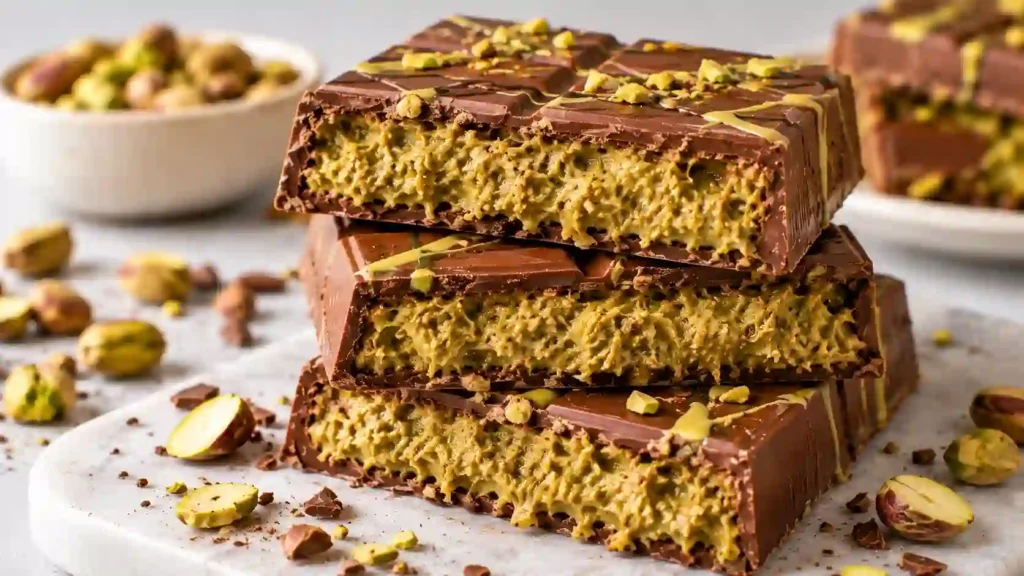
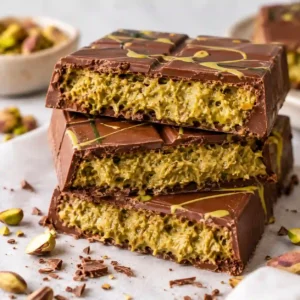
Dubai Chocolate Bar is an indulgent chocolate treat filled with a rich combination of creamy pistachio, nutty tahini, and irresistibly crispy kataifi pastry. Wrapped inside a smooth milk chocolate shell, every bite delivers an impressive contrast between creamy, crunchy, and silky textures.
This homemade version captures the signature appeal of the viral Dubai chocolate while using ingredients that are surprisingly straightforward. The kataifi pastry is toasted in butter until deeply golden and crisp, then mixed with pistachio cream, tahini, and a touch of salt.
A thin chocolate shell surrounds the generous pistachio filling, while an optional green-tinted white chocolate drizzle creates the decorative finish associated with this eye-catching dessert.
If you love pistachios, chocolate, and crunchy desserts, this Dubai pistachio chocolate recipe is a memorable treat for sharing, gifting, or serving on special occasions.
Why You’ll Love This Recipe
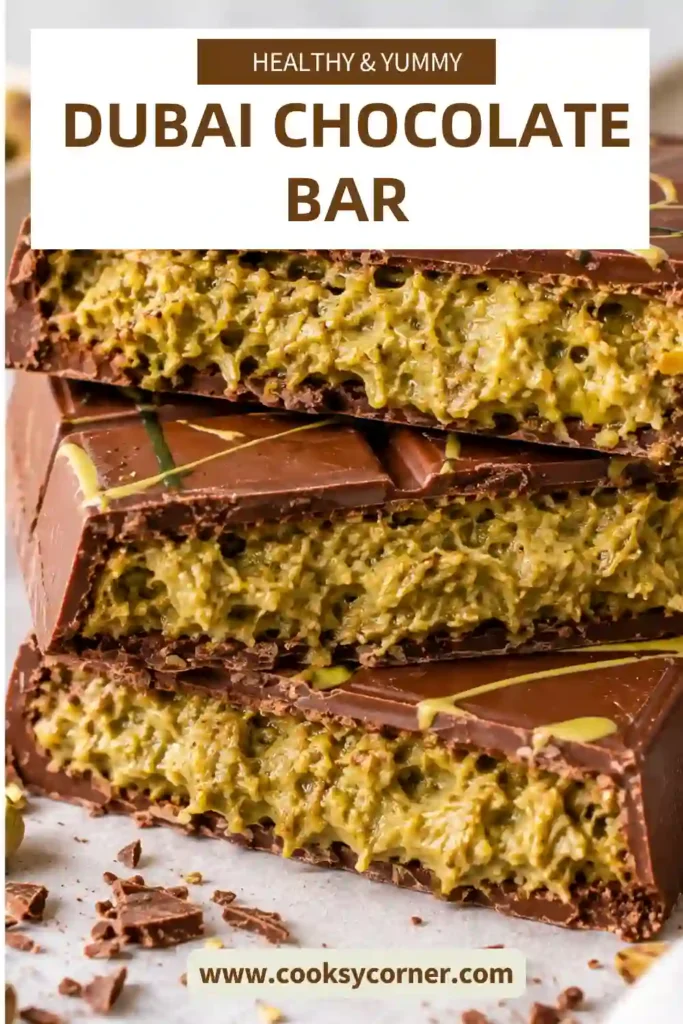
The biggest attraction of this chocolate bar is its incredible texture. Crisp kataifi strands provide a delicate crunch that contrasts beautifully with smooth pistachio cream and creamy milk chocolate.
The flavor is equally appealing. Pistachio cream contributes sweet, deeply nutty notes, while tahini adds a subtle toasted sesame flavor that keeps the filling from tasting one-dimensional.
A small amount of salt balances the sweetness and brings out the flavors of both the pistachios and chocolate.
The chocolate shell adds a satisfying snap when chilled and creates the perfect container for the thick pistachio-kataifi center.
It is also highly impressive visually. An optional drizzle of green-colored white chocolate adds contrast to the milk chocolate shell and makes the finished bars look elegant enough for gifting.
Best of all, you do not need professional chocolate-making experience. With a silicone mold, a double boiler, and a little patience while the layers chill, you can make this popular pistachio chocolate bar at home.
Ingredients
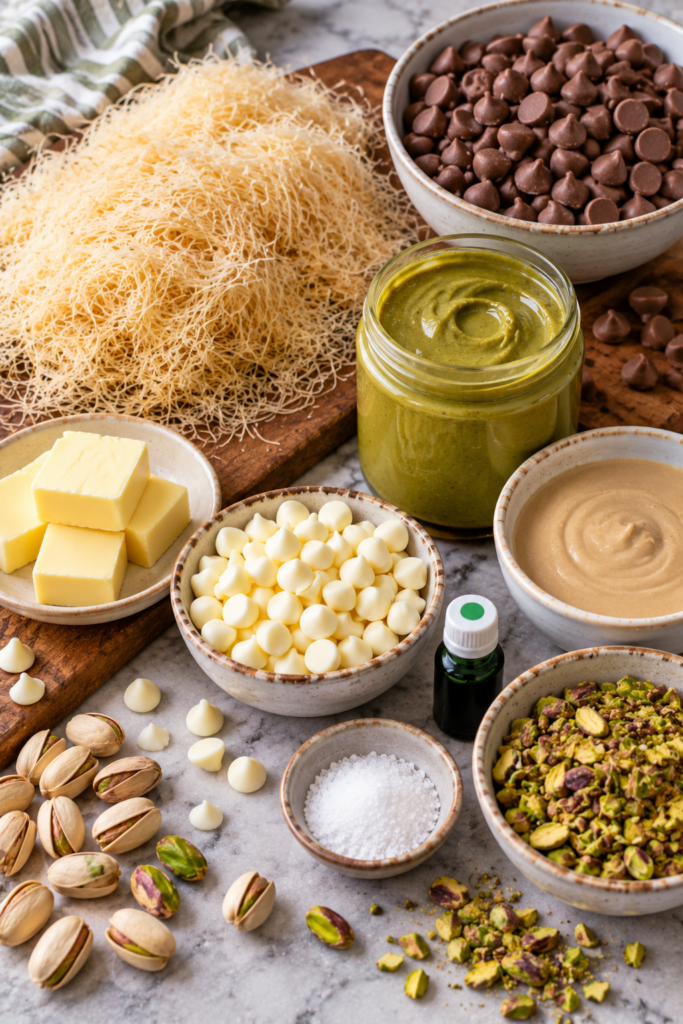
- 3 tablespoons unsalted butter or coconut oil, divided
- 5 ounces coarsely chopped kataifi pastry dough, about 2 packed cups, thawed if frozen
- 1 (7- to 8-ounce) jar creamy pistachio butter or pistachio cream
- 2 tablespoons well-stirred tahini
- ¼ teaspoon kosher salt
- 3 tablespoons white chocolate chips containing cocoa butter
- 1–4 drops green food coloring, optional
- 12 ounces good-quality milk chocolate chips, about 2 cups, divided
Instructions
- Place a large nonstick skillet over medium heat and add 2 tablespoons of the unsalted butter.
- Once the butter has melted, add the coarsely chopped kataifi pastry.
- Cook the kataifi for approximately 8–10 minutes, stirring regularly so it browns evenly. Continue cooking until the pastry becomes deeply golden, crisp, and fragrant.
- Transfer the toasted kataifi immediately to a medium mixing bowl.
- While the pastry is still warm, add the pistachio cream, tahini, and kosher salt.
- Stir thoroughly until the toasted kataifi is evenly coated in the creamy pistachio mixture. Set the filling aside.
- Place two large rectangular silicone chocolate molds or one extra-large rectangular chocolate mold on a flat baking sheet. The baking sheet will make the flexible molds much easier to move between your work surface, freezer, and refrigerator.
- Fill a small saucepan about halfway with water and bring it to a gentle simmer over medium heat.
- Place a heatproof bowl over the saucepan, making sure the bottom of the bowl does not sit directly in the water.
- Add the white chocolate chips to the bowl. Stir constantly until completely melted and smooth, approximately 1 minute.
- Carefully remove the bowl from the heat. If using food coloring, stir in 1–4 drops until you achieve your preferred shade of green. Use a food coloring suitable for chocolate.
- Drizzle the melted white chocolate irregularly across the bottom of the molds to create a decorative pattern.
- Transfer the molds to the freezer while you prepare the milk chocolate.
- Reserve ¼ cup of the milk chocolate chips and set them aside.
- Return the heatproof bowl to the double boiler. Add the remaining milk chocolate chips and the remaining 1 tablespoon butter.
- Stir constantly over the gentle heat until the chocolate is completely melted and smooth, approximately 2 minutes.
- Remove the bowl from the heat. Immediately add the reserved ¼ cup milk chocolate chips.
- Stir until the reserved chocolate has completely melted and the mixture looks smooth and glossy.
- Remove the molds from the freezer.
- Spoon enough melted milk chocolate into the molds to create a thin layer across the bottom and up the sides. Approximately ¼ cup may be enough depending on the size and shape of your molds.
- Use the back of a spoon, pastry brush, or small offset spatula to spread the chocolate evenly, making sure the corners and sides are covered.
- Freeze the molds for approximately 10 minutes, or until the chocolate shell feels firm.
- Remove the molds from the freezer and spoon the pistachio-kataifi mixture into the chocolate shells.
- Gently spread and press the filling into an even layer using an offset spatula or the back of a spoon. Avoid pressing so aggressively that you damage the chocolate shell.
- Leave a small amount of space at the top of the mold for the final chocolate layer.
- Pour the remaining melted milk chocolate over the pistachio filling.
- Spread the chocolate into an even layer, making sure the pistachio mixture is completely enclosed.
- Run a bench scraper or offset spatula lightly across the top to level the chocolate and remove excess.
- Transfer the filled molds to the refrigerator.
- Refrigerate the Dubai Chocolate Bar for at least 40 minutes, or until the chocolate is completely firm and the filling is well set.
- Carefully flex the silicone mold away from the edges of the chocolate and gently remove each bar.
- If necessary, use a sharp knife to trim away any thin pieces of excess chocolate around the edges.
- Allow the bar to sit for a few minutes before slicing so the chocolate is easier to cut cleanly.
- Cut into pieces with a sharp knife and serve.
Tips & Tricks
Toast the kataifi thoroughly. This is one of the most important steps. The signature appeal of a kataifi chocolate bar comes from the contrast between the crisp pastry and creamy filling. Pale or undercooked kataifi will not provide the same crunch.
Keep the kataifi moving. The fine pastry strands can brown quickly. Stir regularly to encourage even color and prevent burnt spots.
Chop the kataifi before cooking. Shorter pieces are easier to toast evenly and make the finished bar easier to slice and eat.
Use creamy pistachio butter or pistachio cream. A smooth consistency helps bind the toasted kataifi together and creates the signature rich filling.
Stir the tahini before measuring. Natural tahini can separate in the jar, so stir it thoroughly before adding it to the filling.
Do not skip the salt. Even a small amount helps balance the sweetness of the chocolate and pistachio cream.
Use good-quality chocolate. Chocolate is a major component of this dessert, so flavor and texture matter. Choose milk chocolate that melts smoothly and that you enjoy eating on its own.
Keep water away from melted chocolate. Even a small amount of water can cause chocolate to seize and become thick or grainy. Make sure your bowl and utensils are completely dry.
Use gentle heat. Chocolate can scorch when overheated. A gently simmering double boiler provides more control than direct heat.
Use oil-compatible coloring. Regular water-based coloring can cause melted chocolate to seize. If adding green color to white chocolate, choose an oil-based or chocolate-compatible food coloring.
Make a complete chocolate shell. Pay particular attention to the sides and corners of the mold. Thin or uncovered spots can crack when the bar is unmolded.
Do not make the shell excessively thick. A thick shell can be difficult to bite and may overpower the pistachio filling. Aim for a thin but complete layer.
Leave room for the final layer. Avoid filling the mold completely with pistachio kataifi. A little space is necessary to seal the bar with milk chocolate.
Use a baking sheet beneath silicone molds. Flexible molds can bend when moved, which may cause melted chocolate to spill.
Chill until completely firm. Trying to remove the bar too early can crack the shell or distort the shape.
Details
Prep Time: 25 minutes
Cook Time: 15 minutes
Chill Time: Approximately 50 minutes
Total Time: Approximately 1 hour 30 minutes
Yield: 2 large bars or 1 extra-large bar, depending on mold size
Category: Dessert
Method: Stovetop and Chilling
Cuisine: Dubai-inspired / Middle Eastern-inspired
Difficulty: Intermediate
Dietary Notes: Vegetarian and halal-friendly when prepared with halal-suitable chocolate, pistachio cream, tahini, kataifi pastry, butter, and food coloring

132
Notes
Pistachio cream and pistachio butter can vary significantly between brands. Some are sweet and creamy, while others are closer to pure pistachio paste. A sweet, creamy variety produces a filling similar to the popular dessert-bar style.
If your pistachio spread is extremely thick, make sure it is thoroughly mixed before combining it with the toasted kataifi.
Coconut oil can replace the unsalted butter if preferred. It may add a subtle coconut flavor depending on the product used.
The decorative white chocolate layer is optional. The bar will still taste delicious without it.
You can also leave the white chocolate its natural color instead of adding green food coloring.
For a stronger pistachio appearance, sprinkle a small amount of finely chopped pistachios into the mold before adding the milk chocolate shell.
The amount of chocolate required can vary slightly depending on the dimensions and depth of your mold. It is better to have a little extra melted chocolate than not enough to completely seal the filling.
When slicing, use a sharp knife and gentle pressure. If the bar is extremely cold, allow it to sit at room temperature briefly before cutting to reduce cracking.
Nutrition (optional)
Approximate nutrition will vary significantly according to the pistachio cream, chocolate, mold size, and portion size.
Based on approximately 12 portions:
Calories: Approximately 330 kcal
Protein: Approximately 6 g
Carbohydrates: Approximately 32 g
Fat: Approximately 21 g
These values are estimates only. For accurate nutrition information, calculate the recipe using the exact brands and quantities you use.
FAQ
What is a Dubai Chocolate Bar?
Dubai Chocolate Bar is a chocolate dessert known for its thick pistachio and crispy kataifi filling enclosed inside a chocolate shell. Tahini is often combined with the pistachio filling to add a nutty sesame flavor and balance the sweetness.
What is inside Dubai chocolate?
This version contains a filling made from toasted kataifi pastry, pistachio cream, tahini, and salt. The filling is enclosed in milk chocolate, with an optional decorative white chocolate drizzle.
What is kataifi?
Kataifi is a very fine shredded pastry dough commonly used in Middle Eastern and Mediterranean desserts. When toasted in butter, the delicate strands become golden and crisp, creating the signature crunchy texture in this pistachio chocolate bar.
Why is Dubai chocolate crunchy?
The crunch comes primarily from toasted kataifi pastry. The pastry is cooked in butter until golden and crisp before being mixed with pistachio cream and tahini.
Can I make Dubai Chocolate Bar without a special mold?
Yes, although the finished appearance will differ. A silicone loaf mold, silicone candy mold, or another suitable flexible chocolate mold can work. The most important requirement is that you can create a chocolate shell and remove the finished bar without breaking it.
Can I make Dubai chocolate without tahini?
Yes. Tahini adds a nutty, slightly savory sesame flavor that balances the sweet pistachio cream, but it can be omitted if necessary. The filling will taste sweeter and more strongly of pistachio without it.
What pistachio cream should I use?
Choose a smooth pistachio cream or pistachio butter that you enjoy eating. For a sweeter dessert-style result, use a creamy sweetened pistachio spread. For stronger pure pistachio flavor, use a less-sweet pistachio butter.
Can I use dark chocolate instead of milk chocolate?
Yes. Dark chocolate creates a less-sweet bar and provides stronger contrast with the creamy pistachio filling. You can also use a combination of milk and dark chocolate.
Can I use white chocolate for the shell?
Yes, although the flavor will be considerably sweeter. If using white chocolate, choose good-quality chocolate containing cocoa butter for smoother melting and better texture.
Why did my chocolate seize?
Chocolate commonly seizes when it comes into contact with water or excessive heat. Keep all bowls and utensils completely dry and melt the chocolate gently.
Why is my kataifi filling not crunchy?
The pastry may not have been toasted long enough, or it may have absorbed too much moisture. Cook the kataifi until it is evenly golden and distinctly crisp before mixing it with the pistachio cream.
Why does my chocolate shell crack?
The shell may be too thin, the filling may have been packed too firmly, or the bar may have been unmolded before completely setting. Make sure the entire mold is coated with chocolate and chill thoroughly before removing the bar.
How long does Dubai Chocolate Bar need to set?
After assembly, refrigerate the chocolate for at least 40 minutes. Larger or thicker bars may benefit from additional chilling time.
Is Dubai Chocolate Bar halal-friendly?
It can be. The basic ingredients do not require alcohol or pork products. Check packaged chocolate, pistachio cream, kataifi, tahini, butter, and food coloring to ensure they meet your halal requirements.
Storage
Room Temperature: Because the filling contains pistachio cream and toasted pastry, storing the bar in a cool environment is important. Short-term room-temperature storage may be suitable in a cool home, but heat can soften or melt the chocolate.
Refrigerator: For the most reliable storage, place the finished bar in an airtight container and refrigerate it. It should maintain good quality for approximately 1–2 weeks, depending on the ingredients used.
Allow refrigerated chocolate to sit at room temperature for approximately 10–15 minutes before eating if you prefer a slightly softer filling.
Freezer: The bar can be frozen for longer storage, although freezing and thawing may affect the appearance of the chocolate and texture of the kataifi.
Wrap the bar well and place it inside an airtight freezer-safe container. Thaw it gradually in the refrigerator before bringing it toward room temperature.
Keeping the Kataifi Crisp: Moisture is the biggest enemy of the crunchy filling. Keep the chocolate tightly covered and avoid repeatedly moving it between very cold and warm environments, which can encourage condensation.
Similar Recipes
Dubai Chocolate Bar: Pistachio Kataifi Recipe
Ingredients
- 3 tablespoons unsalted butter or coconut oil divided
- 5 ounces coarsely chopped kataifi pastry dough about 2 packed cups, thawed if frozen
- 1 7- to 8-ounce jar creamy pistachio butter or pistachio cream
- 2 tablespoons well-stirred tahini
- ¼ teaspoon kosher salt
- 3 tablespoons white chocolate chips containing cocoa butter
- 1 –4 drops green food coloring optional
- 12 ounces good-quality milk chocolate chips about 2 cups, divided
Instructions
- Place a large nonstick skillet over medium heat and add 2 tablespoons of the unsalted butter.
- Once the butter has melted, add the coarsely chopped kataifi pastry.
- Cook the kataifi for approximately 8–10 minutes, stirring regularly so it browns evenly. Continue cooking until the pastry becomes deeply golden, crisp, and fragrant.
- Transfer the toasted kataifi immediately to a medium mixing bowl.
- While the pastry is still warm, add the pistachio cream, tahini, and kosher salt.
- Stir thoroughly until the toasted kataifi is evenly coated in the creamy pistachio mixture. Set the filling aside.
- Place two large rectangular silicone chocolate molds or one extra-large rectangular chocolate mold on a flat baking sheet. The baking sheet will make the flexible molds much easier to move between your work surface, freezer, and refrigerator.
- Fill a small saucepan about halfway with water and bring it to a gentle simmer over medium heat.
- Place a heatproof bowl over the saucepan, making sure the bottom of the bowl does not sit directly in the water.
- Add the white chocolate chips to the bowl. Stir constantly until completely melted and smooth, approximately 1 minute.
- Carefully remove the bowl from the heat. If using food coloring, stir in 1–4 drops until you achieve your preferred shade of green. Use a food coloring suitable for chocolate.
- Drizzle the melted white chocolate irregularly across the bottom of the molds to create a decorative pattern.
- Transfer the molds to the freezer while you prepare the milk chocolate.
- Reserve ¼ cup of the milk chocolate chips and set them aside.
- Return the heatproof bowl to the double boiler. Add the remaining milk chocolate chips and the remaining 1 tablespoon butter.
- Stir constantly over the gentle heat until the chocolate is completely melted and smooth, approximately 2 minutes.
- Remove the bowl from the heat. Immediately add the reserved ¼ cup milk chocolate chips.
- Stir until the reserved chocolate has completely melted and the mixture looks smooth and glossy.
- Remove the molds from the freezer.
- Spoon enough melted milk chocolate into the molds to create a thin layer across the bottom and up the sides. Approximately ¼ cup may be enough depending on the size and shape of your molds.
- Use the back of a spoon, pastry brush, or small offset spatula to spread the chocolate evenly, making sure the corners and sides are covered.
- Freeze the molds for approximately 10 minutes, or until the chocolate shell feels firm.
- Remove the molds from the freezer and spoon the pistachio-kataifi mixture into the chocolate shells.
- Gently spread and press the filling into an even layer using an offset spatula or the back of a spoon. Avoid pressing so aggressively that you damage the chocolate shell.
- Leave a small amount of space at the top of the mold for the final chocolate layer.
- Pour the remaining melted milk chocolate over the pistachio filling.
- Spread the chocolate into an even layer, making sure the pistachio mixture is completely enclosed.
- Run a bench scraper or offset spatula lightly across the top to level the chocolate and remove excess.
- Transfer the filled molds to the refrigerator.
- Refrigerate the Dubai Chocolate Bar for at least 40 minutes, or until the chocolate is completely firm and the filling is well set.
- Carefully flex the silicone mold away from the edges of the chocolate and gently remove each bar.
- If necessary, use a sharp knife to trim away any thin pieces of excess chocolate around the edges.
- Allow the bar to sit for a few minutes before slicing so the chocolate is easier to cut cleanly.
- Cut into pieces with a sharp knife and serve.
Notes
Conclusion
Dubai Chocolate Bar combines three irresistible elements in one dessert: smooth chocolate, creamy pistachio filling, and crispy golden kataifi.
Toasting the kataifi until deeply golden is the key to achieving that distinctive crunch. Mixing it with pistachio cream and tahini then creates a filling that is rich, nutty, and balanced by just enough salt.
Once enclosed inside a smooth milk chocolate shell, the contrasting textures make every slice feel especially indulgent. The optional green white-chocolate decoration gives the finished bar an eye-catching appearance without making the preparation significantly more complicated.
Whether you are recreating the viral Dubai chocolate at home or simply looking for a memorable pistachio dessert, this homemade version delivers the creamy, crunchy chocolate experience that makes this style of bar so popular.