

Butternut Squash Gnocchi brings together tender homemade dumplings, sweet roasted-squash flavor, and a rich Asiago cream sauce. Each little gnocchi is soft in the center, lightly golden from the skillet, and coated in a velvety sauce with rosemary, black pepper, and a hint of nutmeg.
This recipe combines riced potatoes, butternut squash purée, ricotta, and Parmesan-style cheese to create a dough that feels special without requiring complicated equipment. Once the gnocchi are shaped and boiled, a quick turn in a buttery skillet adds delicious golden edges.
The finished dish is cozy enough for a chilly evening and elegant enough for a family gathering. If you love homemade pasta, creamy sauces, and comforting autumn flavors, this is a lovely recipe to add to your collection.
Why You’ll Love This Recipe
- Soft, pillowy texture: Potato, squash, and ricotta create tender gnocchi when the dough is handled gently.
- Golden, buttery edges: Pan-frying the boiled gnocchi adds texture and a delicious toasted flavor.
- Creamy, savory sauce: Asiago-style cheese melts into heavy cream for a rich finish.
- Warm seasonal flavor: Butternut squash, rosemary, and nutmeg make this a wonderful fall comfort food.
- Easy to customize: You can adjust the dough size, use a fork to shape the gnocchi, or freeze extra pieces for another meal.
- Family-friendly: The sauce is mild, creamy, and flavorful without being spicy.
Ingredients
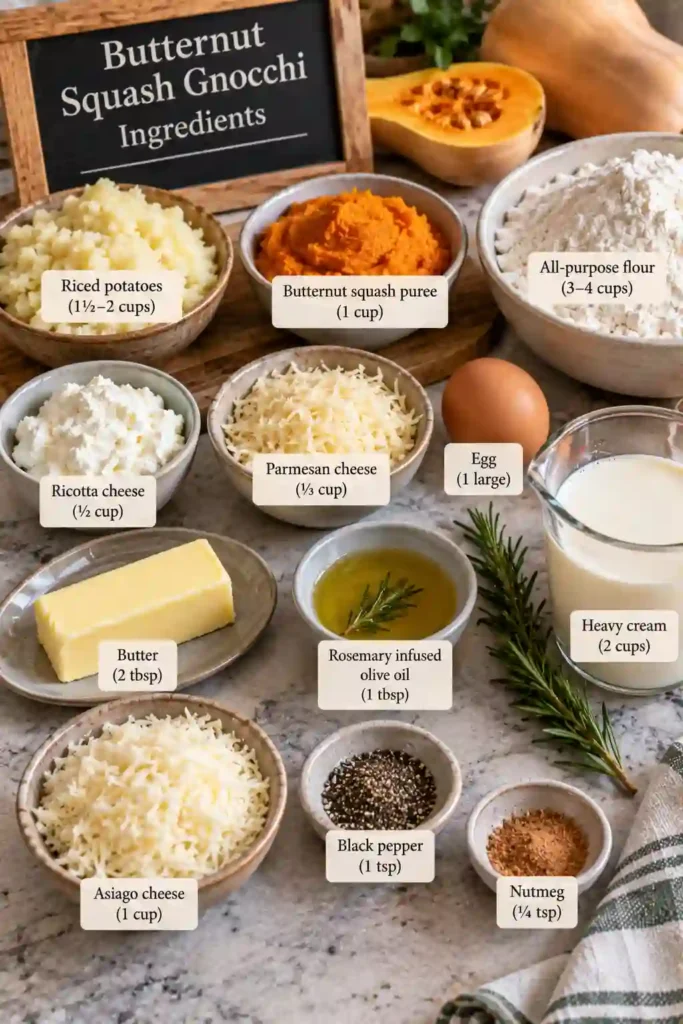
For the Gnocchi
- 1½–2 cups riced potatoes, from approximately 1 medium-large potato
- 1 cup butternut squash purée
- 3–4 cups all-purpose flour, plus more for dusting
- ½ cup ricotta cheese made with microbial or vegetarian rennet
- ⅓ cup vegetarian-rennet Parmesan-style cheese
- 1 large egg
For the Creamy Asiago Sauce
- 2 tablespoons butter
- 1 tablespoon rosemary-infused olive oil
- 2 cups heavy cream
- 1 cup grated Asiago-style cheese made with microbial or vegetarian rennet
- 1 teaspoon black pepper
- ¼ teaspoon freshly grated nutmeg
Instructions
Step 1: Prepare the potatoes and squash
Cook the potato until tender, then peel and pass it through a potato ricer while warm. Measure out 1½–2 cups and let it cool until it is comfortable to handle.
Use thick butternut squash purée rather than a watery purée. If it seems loose, let it drain in a fine-mesh strainer before measuring.
Step 2: Build the dough
Place 3 cups of flour on a clean work surface and form a wide mound. Spread the riced potatoes and squash purée over the flour.
Make a well in the center. Add the egg and beat it lightly with a fork, then add the ricotta and Parmesan-style cheese.
Step 3: Combine gently
Using your hands or a bench scraper, bring the flour and other ingredients together until a soft dough begins to form.
Add some of the remaining flour a little at a time only if the dough is too sticky to handle. The exact amount depends on the moisture in the potatoes and squash.
Step 4: Knead briefly
Knead just until the dough holds together, then shape it into a rectangle.
Avoid prolonged kneading or adding more flour than necessary. Too much of either can make the gnocchi dense.
Step 5: Divide the dough
Cut the rectangle into 6–8 pieces.
Keep the pieces you are not working with lightly covered so they do not dry out.
Step 6: Roll into ropes
On a lightly floured surface, roll each piece into an even rope.
Make thicker ropes for plumper gnocchi or thinner ropes for smaller pieces.
Step 7: Cut the gnocchi
Use a sharp knife or bench scraper to cut each rope into approximately 1-inch pieces.
Toss the pieces lightly with flour and arrange them on a floured tray in a single layer.
Step 8: Add ridges if desired
For traditional-looking gnocchi, gently roll each piece over a gnocchi board or the back of a fork.
The ridges help hold the creamy sauce, but this step is optional.
Step 9: Bring water to a boil
Fill a large pot with water and bring it to a gentle boil.
Before cooking the full batch, boil one test gnocchi. If it falls apart, work a little more flour into the remaining dough.
Step 10: Boil in batches
Add approximately 8–10 gnocchi at a time, or enough to fit comfortably without crowding the pot.
Stir gently once to prevent sticking. When the gnocchi float, let them cook for about 30 seconds more, then lift them out with a slotted spoon.
Step 11: Heat the skillet
While the gnocchi cook, place a large nonstick skillet over medium-high heat.
Add the butter and rosemary-infused olive oil, swirling the pan until the butter melts and coats the surface.
Step 12: Brown the gnocchi
Carefully transfer the drained gnocchi to the skillet.
Let them develop light golden patches before turning. Work in batches so the pan does not become overcrowded.
Continue boiling and browning the remaining gnocchi. Transfer browned pieces to a plate if needed while you finish the batches.
Step 13: Add the cream
Reduce the skillet heat to medium-low. Return the gnocchi to the pan, working in batches if the pan is too small to hold everything comfortably.
Pour in the heavy cream and bring it to a gentle simmer. Let it thicken slightly, stirring carefully so the gnocchi remain intact.
Step 14: Finish the sauce
Remove the skillet from the heat. Stir in the grated Asiago-style cheese, black pepper, and nutmeg until the cheese melts into the warm cream.
If the sauce is too thick, add a small splash of hot gnocchi cooking water. If needed, return the skillet briefly to low heat, but avoid boiling the cheese sauce.
Step 15: Serve
Spoon the Butternut Squash Gnocchi into warm bowls and serve immediately, with extra black pepper or a little more vegetarian-rennet cheese if desired.

Tips & Tricks
Use dry potatoes. Moisture is one of the biggest factors in gnocchi dough. Baking the potato or cooking it with minimal added water can help keep the dough manageable.
Choose thick squash purée. Excess moisture makes the dough sticky and encourages you to add too much flour. Drain watery purée before using it.
Start with 3 cups of flour. The fourth cup is there if needed. Add it gradually rather than automatically using the full amount.
Handle the dough lightly. A brief knead is enough. Overworking develops gluten and can make the finished gnocchi chewy.
Cook one test piece. This is an easy way to check whether your dough will hold together before boiling the full batch.
Don’t overcrowd the skillet. A little space around the gnocchi helps them brown instead of steam.
Grate the cheese yourself. Freshly grated cheese generally melts more smoothly into the warm cream than pre-shredded varieties.
Keep the sauce at gentle heat. High heat can make a cheese-and-cream sauce separate or become grainy.
Check cheese labels carefully. For halal-friendly preparation, choose ricotta and hard cheeses made with microbial or vegetarian rennet. Traditional Parmesan and Asiago may use animal rennet, so a suitable labeled alternative is important.
Details
- Prep Time: 35–45 minutes, assuming the potato and squash are already cooked
- Cook Time: 25–35 minutes, depending on batch size
- Total Time: Approximately 1–1 hour 20 minutes, excluding cooking and cooling the potato and squash
- Yield: Approximately 6–8 servings
- Category: Main Course
- Method: Boiling and Pan-Frying
- Cuisine: Italian-Inspired
- Difficulty: Intermediate
- Dietary Notes: Vegetarian and halal-friendly when all cheeses use microbial or vegetarian rennet and other ingredients are suitable. Contains wheat, dairy, and egg.

Notes
For a lighter sauce: Replace part of the heavy cream with milk, understanding that the sauce will be thinner and less rich.
For a stronger rosemary flavor: Warm a small sprig of rosemary in the butter and oil, then remove it before adding the gnocchi.
For a different cheese: A vegetarian-rennet aged hard cheese can replace the Asiago-style cheese, though the flavor will change.
For smaller gnocchi: Roll thinner ropes and cut slightly shorter pieces. They may cook more quickly.
For serving: Pair with a simple green salad, roasted broccoli, sautéed spinach, or green beans to balance the rich sauce.
For freezing: Freeze uncooked, shaped gnocchi before boiling. Detailed instructions are included in the Storage section.
Nutrition
Approximate nutrition per serving, based on 8 servings and the amount of flour and sauce used:
- Calories: 650–750 kcal
- Protein: 16–20 g
- Carbohydrates: 65–80 g
- Fat: 35–42 g
These estimates vary considerably with the flour needed for the dough, the size of the servings, and how much sauce is served with each portion.
FAQ
1. Can I make homemade butternut squash gnocchi ahead of time?
Yes. Shape the gnocchi, arrange them in a single layer on a floured tray, and freeze them until firm. Transfer the frozen pieces to a freezer-safe container or bag. Cook them directly from frozen when you are ready to serve.
2. Why is my butternut squash gnocchi dough so sticky?
The most likely reason is excess moisture in the potato, squash purée, or ricotta. Drain watery ingredients and add flour gradually until the dough is soft but manageable. Avoid adding so much flour that the gnocchi become heavy.
3. How do I know when gnocchi are cooked?
Fresh gnocchi usually rise to the surface of gently boiling water when nearly done. Allow them about 30 seconds more, then remove them with a slotted spoon. A test piece should have a tender center without tasting floury.
4. Can I skip pan-frying the gnocchi?
Yes. You can transfer the boiled gnocchi directly into the warm sauce for a softer result. Pan fried gnocchi adds golden edges and a buttery flavor, but it is not essential to the recipe.
5. What makes the Asiago cream sauce smooth?
Use finely grated cheese, gently simmer the cream, and stir in the cheese after removing the pan from the heat. Avoid a vigorous boil after adding the cheese. A little reserved gnocchi cooking water can help loosen the sauce if it becomes too thick.
6. Can I make this butternut squash gnocchi recipe halal-friendly?
Yes. The main ingredients are suitable when you choose cheeses made with microbial or vegetarian rennet and verify that any packaged ingredients meet your requirements. Check ricotta, Parmesan-style cheese, and Asiago-style cheese individually rather than assuming all versions are made the same way.
Storage
Refrigerator
Store cooked gnocchi and sauce in an airtight container in the refrigerator for up to 3–4 days. Refrigerate within 2 hours of cooking.
The gnocchi will continue absorbing some sauce as they sit, so the dish may become thicker.
Freezer
For the best texture, freeze the uncooked, shaped gnocchi without sauce.
Arrange them in a single layer on a lightly floured, parchment-lined tray. Freeze until firm, then transfer to a freezer-safe bag or container. Use within 2–3 months for the best quality.
Boil directly from frozen in batches; do not thaw first. They may need slightly longer to float and cook through.
Reheating
Warm cooked gnocchi gently in a skillet over low heat with a splash of milk, cream, or water to loosen the sauce. Stir carefully until heated through.
Avoid high heat, which can cause the sauce to separate and the gnocchi to break apart.

Similar Recipes

Butternut Squash Gnocchi with Creamy Asiago Sauce
Ingredients
For the Gnocchi
- 1½ –2 cups riced potatoes from approximately 1 medium-large potato
- 1 cup butternut squash purée
- 3 –4 cups all-purpose flour plus more for dusting
- ½ cup ricotta cheese made with microbial or vegetarian rennet
- ⅓ cup vegetarian-rennet Parmesan-style cheese
- 1 large egg
For the Creamy Asiago Sauce
- 2 tablespoons butter
- 1 tablespoon rosemary-infused olive oil
- 2 cups heavy cream
- 1 cup grated Asiago-style cheese made with microbial or vegetarian rennet
- 1 teaspoon black pepper
- ¼ teaspoon freshly grated nutmeg
Instructions
- Step 1: Prepare the potatoes and squash
- Cook the potato until tender, then peel and pass it through a potato ricer while warm. Measure out 1½–2 cups and let it cool until it is comfortable to handle.
- Use thick butternut squash purée rather than a watery purée. If it seems loose, let it drain in a fine-mesh strainer before measuring.
- Step 2: Build the dough
- Place 3 cups of flour on a clean work surface and form a wide mound. Spread the riced potatoes and squash purée over the flour.
- Make a well in the center. Add the egg and beat it lightly with a fork, then add the ricotta and Parmesan-style cheese.
- Step 3: Combine gently
- Using your hands or a bench scraper, bring the flour and other ingredients together until a soft dough begins to form.
- Add some of the remaining flour a little at a time only if the dough is too sticky to handle. The exact amount depends on the moisture in the potatoes and squash.
- Step 4: Knead briefly
- Knead just until the dough holds together, then shape it into a rectangle.
- Avoid prolonged kneading or adding more flour than necessary. Too much of either can make the gnocchi dense.
- Step 5: Divide the dough
- Cut the rectangle into 6–8 pieces.
- Keep the pieces you are not working with lightly covered so they do not dry out.
- Step 6: Roll into ropes
- On a lightly floured surface, roll each piece into an even rope.
- Make thicker ropes for plumper gnocchi or thinner ropes for smaller pieces.
- Step 7: Cut the gnocchi
- Use a sharp knife or bench scraper to cut each rope into approximately 1-inch pieces.
- Toss the pieces lightly with flour and arrange them on a floured tray in a single layer.
- Step 8: Add ridges if desired
- For traditional-looking gnocchi, gently roll each piece over a gnocchi board or the back of a fork.
- The ridges help hold the creamy sauce, but this step is optional.
- Step 9: Bring water to a boil
- Fill a large pot with water and bring it to a gentle boil.
- Before cooking the full batch, boil one test gnocchi. If it falls apart, work a little more flour into the remaining dough.
- Step 10: Boil in batches
- Add approximately 8–10 gnocchi at a time, or enough to fit comfortably without crowding the pot.
- Stir gently once to prevent sticking. When the gnocchi float, let them cook for about 30 seconds more, then lift them out with a slotted spoon.
- Step 11: Heat the skillet
- While the gnocchi cook, place a large nonstick skillet over medium-high heat.
- Add the butter and rosemary-infused olive oil, swirling the pan until the butter melts and coats the surface.
- Step 12: Brown the gnocchi
- Carefully transfer the drained gnocchi to the skillet.
- Let them develop light golden patches before turning. Work in batches so the pan does not become overcrowded.
- Continue boiling and browning the remaining gnocchi. Transfer browned pieces to a plate if needed while you finish the batches.
- Step 13: Add the cream
- Reduce the skillet heat to medium-low. Return the gnocchi to the pan, working in batches if the pan is too small to hold everything comfortably.
- Pour in the heavy cream and bring it to a gentle simmer. Let it thicken slightly, stirring carefully so the gnocchi remain intact.
- Step 14: Finish the sauce
- Remove the skillet from the heat. Stir in the grated Asiago-style cheese, black pepper, and nutmeg until the cheese melts into the warm cream.
- If the sauce is too thick, add a small splash of hot gnocchi cooking water. If needed, return the skillet briefly to low heat, but avoid boiling the cheese sauce.
- Step 15: Serve
- Spoon the Butternut Squash Gnocchi into warm bowls and serve immediately, with extra black pepper or a little more vegetarian-rennet cheese if desired.
Notes
Conclusion
Butternut Squash Gnocchi is a rewarding homemade dish that turns simple ingredients into a cozy, memorable meal. The squash adds gentle sweetness, the skillet gives the gnocchi golden edges, and the creamy Asiago-style sauce brings everything together.
Keep the dough soft, work in batches, and use gentle heat when finishing the sauce. With those few techniques, you can make tender homemade gnocchi that feels right at home on a family dinner table or a special-occasion menu.