
Best Buddha Bowl is a colorful, nourishing meal packed with roasted sweet potatoes, hearty brown rice, chickpeas, massaged kale, crunchy vegetables, sauerkraut, seeds, and creamy turmeric tahini sauce. Every bowl offers a satisfying mix of warm, cool, crisp, tender, and creamy textures.
This easy Buddha bowl recipe is also wonderfully flexible. Prepare the components ahead for meal prep, swap quinoa for brown rice, or use lentils instead of chickpeas for a fresh plant-based lunch or dinner.
Why You’ll Love This Recipe
The biggest appeal of this bowl is variety. Roasted sweet potatoes provide caramelized sweetness, while fresh radishes, carrots, and cabbage add crisp texture and vibrant color.
Massaging kale with lemon and salt softens the leaves and makes them much more tender. Chickpeas and brown rice make the bowl satisfying, while sauerkraut contributes a bright, tangy contrast.
A creamy turmeric tahini sauce ties everything together with nutty, savory flavor. The recipe is naturally family-friendly and easy to customize, so everyone can assemble a bowl with their favorite ingredients.
Ingredients
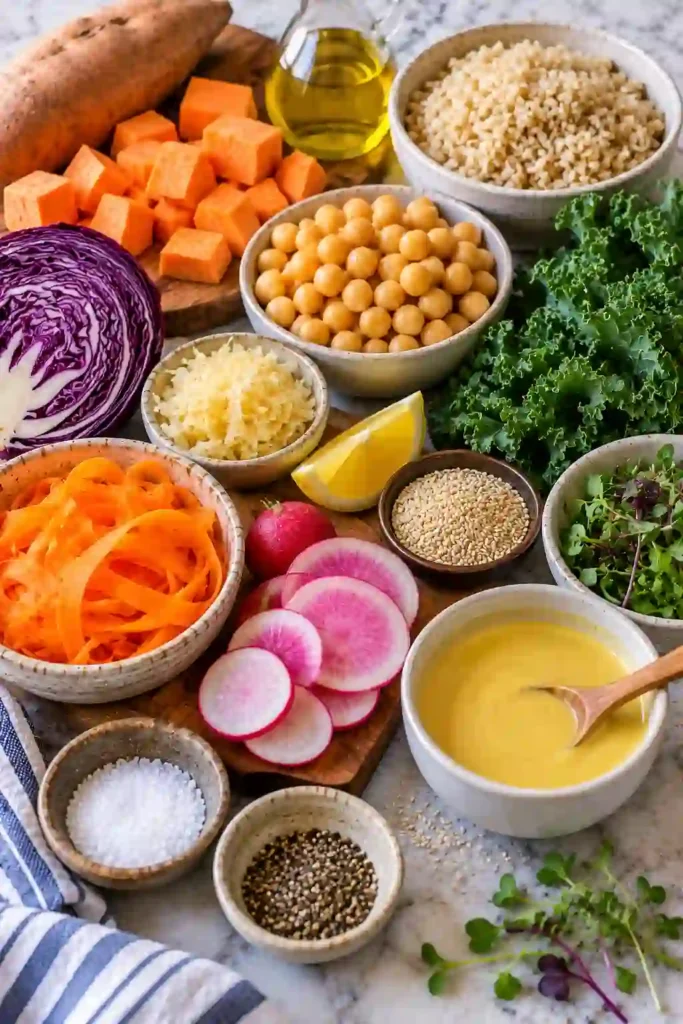
- 1 large sweet potato, cubed
- Extra-virgin olive oil, for drizzling
- 1 watermelon radish or 2 red radishes
- 2 medium carrots
- 1 cup shredded red cabbage
- 1 lemon wedge
- 8 kale leaves, chopped
- 2 cups cooked brown rice or quinoa
- 1 cup cooked chickpeas or lentils
- ¾ cup sauerkraut or other fermented vegetables
- 2 tablespoons sesame seeds or hemp seeds
- Turmeric tahini sauce, for serving
- Microgreens, optional
- Sea salt, to taste
- Freshly ground black pepper, to taste
Instructions
- Preheat the oven to 400°F (200°C). Line a large baking sheet with parchment paper.
- Place the cubed sweet potato on the prepared baking sheet. Drizzle with olive oil and season with sea salt and black pepper.
- Toss until evenly coated, then arrange the cubes in a single layer.
- Roast for about 20 minutes, turning once if desired, until the sweet potatoes are tender and golden around the edges.
- Meanwhile, thinly slice the radish into rounds using a sharp knife or mandoline.
- Use a vegetable peeler to cut the carrots into thin ribbons.
- Place the radish, carrot ribbons, and shredded red cabbage in a bowl. Add a squeeze of fresh lemon juice and gently toss. Set aside.
- Add the chopped kale to a separate large bowl. Squeeze a little lemon juice over the leaves and add a few pinches of salt.
- Massage the kale with clean hands for 1–2 minutes, or until the leaves soften, darken, and reduce noticeably in volume.
- Divide the cooked brown rice or quinoa among individual serving bowls.
- Arrange the roasted sweet potato, chickpeas, massaged kale, carrot ribbons, radish, red cabbage, and sauerkraut over the grains.
- Sprinkle the Best Buddha Bowl with sesame or hemp seeds and add microgreens, if using.
- Season with additional salt and freshly ground black pepper to taste.
- Finish generously with turmeric tahini sauce and serve.

Tips & Tricks
Cut the sweet potato into evenly sized cubes so they roast at approximately the same rate. Leaving a little space between the pieces also encourages caramelization instead of steaming.
For crispier sweet potatoes, make sure the baking sheet isn’t overcrowded. Use two pans if you’re preparing a larger batch.
Don’t skip massaging the kale. Raw kale can be firm and slightly bitter, while lemon, salt, and a brief massage make it noticeably softer and more pleasant to eat.
A vegetable peeler is an easy way to create attractive carrot ribbons without specialized equipment.
Drain chickpeas thoroughly before adding them to the bowl. For additional texture, you can roast the chickpeas alongside the sweet potatoes until lightly crisp.
Prepare the grains, roasted vegetables, and sauce ahead of time for easier meal prep. Keep fresh and fermented vegetables separate until you’re ready to assemble the bowls.
If your tahini sauce becomes too thick, whisk in cold water a teaspoon at a time until it reaches a smooth, drizzleable consistency.
Details
Prep Time: 20 minutes
Cook Time: 20 minutes
Total Time: 40 minutes
Yield: 4 servings
Category: Main Course, Lunch
Method: Roasting, Assembling
Cuisine: Global-Inspired
Difficulty: Easy
Dietary Notes: Vegan, vegetarian, dairy-free, plant-based, halal-friendly; naturally gluten-free when all packaged ingredients and sauce are certified gluten-free

Notes
Quinoa can replace brown rice for a slightly lighter base with a different texture.
Use chickpeas for a mild, creamy bite or cooked lentils for a more earthy flavor.
If watermelon radish isn’t available, ordinary red radishes work perfectly.
Sauerkraut can be replaced with another fermented vegetable or omitted if you prefer a milder bowl.
Avocado makes a creamy addition, while cucumber, roasted broccoli, edamame, or shredded beets can add even more variety.
For a simple turmeric tahini sauce, combine tahini with fresh lemon juice, turmeric, a little garlic, salt, and enough water to create a pourable consistency.
Nutrition
Approximate nutrition per serving:
Calories: 450
Protein: 14g
Carbohydrates: 67g
Fat: 16g
Fiber: 13g
Nutrition information is an estimate and will vary depending on the grain, legumes, amount of olive oil, and tahini sauce used.
FAQ
What is a Buddha bowl?
A Buddha bowl generally refers to a meal served in a bowl with a combination of grains, vegetables, plant-based protein, and a flavorful dressing or sauce. Recipes vary widely, making them easy to customize.
Can I make the Best Buddha Bowl ahead of time?
Yes. Cook the grains and sweet potatoes ahead and refrigerate them in separate airtight containers. Prepare the vegetables and sauce separately, then assemble the bowls when you’re ready to eat.
Is a Buddha bowl served hot or cold?
It can be served warm, cold, or at room temperature. This recipe is particularly good with warm rice and roasted sweet potatoes contrasted against cool, crisp vegetables and creamy tahini sauce.
Can I use quinoa instead of brown rice?
Yes. Quinoa works very well as the grain base and can be substituted directly for the cooked brown rice.
What protein can I put in a Buddha bowl?
Chickpeas and lentils are excellent plant-based options. Other possibilities include beans, tofu, tempeh, or edamame, depending on your preferences.
What dressing goes well with a Buddha bowl?
Tahini-based sauces work especially well because their creamy, nutty flavor complements grains, legumes, and roasted vegetables. Turmeric tahini sauce also adds earthy flavor and a vibrant golden color.
Storage
For meal prep, store the individual components separately whenever possible. Refrigerate cooked brown rice or quinoa, roasted sweet potatoes, chickpeas, and prepared vegetables in airtight containers.
Most cooked components will keep well for about 3–4 days in the refrigerator. Follow the package guidance for prepared sauerkraut and other fermented vegetables.
Keep the turmeric tahini sauce in a separate sealed container. It may thicken after refrigeration, so whisk in a little water before serving.
Reheat the grains and sweet potatoes separately, then add the fresh vegetables, sauerkraut, seeds, and sauce.
Freezing the fully assembled bowl isn’t recommended because the fresh vegetables and kale can lose their texture.
Similar Recipes

Best Buddha Bowl – Easy Healthy Grain Bowl
Ingredients
- – 1 large sweet potato cubed
- – Extra-virgin olive oil for drizzling
- – 1 watermelon radish or 2 red radishes
- – 2 medium carrots
- – 1 cup shredded red cabbage
- – 1 lemon wedge
- – 8 kale leaves chopped
- – 2 cups cooked brown rice or quinoa
- – 1 cup cooked chickpeas or lentils
- – ¾ cup sauerkraut or other fermented vegetables
- – 2 tablespoons sesame seeds or hemp seeds
- – Turmeric tahini sauce for serving
- – Microgreens optional
- – Sea salt to taste
- – Freshly ground black pepper to taste
Instructions
- Preheat the oven to 400°F (200°C). Line a large baking sheet with parchment paper.
- Place the cubed sweet potato on the prepared baking sheet. Drizzle with olive oil and season with sea salt and black pepper.
- Toss until evenly coated, then arrange the cubes in a single layer.
- Roast for about 20 minutes, turning once if desired, until the sweet potatoes are tender and golden around the edges.
- Meanwhile, thinly slice the radish into rounds using a sharp knife or mandoline.
- Use a vegetable peeler to cut the carrots into thin ribbons.
- Place the radish, carrot ribbons, and shredded red cabbage in a bowl. Add a squeeze of fresh lemon juice and gently toss. Set aside.
- Add the chopped kale to a separate large bowl. Squeeze a little lemon juice over the leaves and add a few pinches of salt.
- Massage the kale with clean hands for 1–2 minutes, or until the leaves soften, darken, and reduce noticeably in volume.
- Divide the cooked brown rice or quinoa among individual serving bowls.
- Arrange the roasted sweet potato, chickpeas, massaged kale, carrot ribbons, radish, red cabbage, and sauerkraut over the grains.
- Sprinkle the Best Buddha Bowl with sesame or hemp seeds and add microgreens, if using.
- Season with additional salt and freshly ground black pepper to taste.
- Finish generously with turmeric tahini sauce and serve.
Notes
Use chickpeas for a mild, creamy bite or cooked lentils for a more earthy flavor.
If watermelon radish isn’t available, ordinary red radishes work perfectly.
Sauerkraut can be replaced with another fermented vegetable or omitted if you prefer a milder bowl.
Avocado makes a creamy addition, while cucumber, roasted broccoli, edamame, or shredded beets can add even more variety.
Conclusion
Best Buddha Bowl makes it easy to turn simple plant-based ingredients into a colorful and satisfying meal. Roasted sweet potatoes and hearty grains provide warmth, chickpeas add substance, and kale, radishes, carrots, cabbage, and sauerkraut create plenty of contrasting texture.
Finished with seeds and creamy turmeric tahini sauce, it’s a versatile recipe that’s equally useful for a fresh dinner or several days of meal prep. Change the grains, legumes, and vegetables based on what you have and make each bowl your own.